Leave Your Message
Choosing a reliable Slider Zipper Bag manufacturer requires more than comparing prices or glossy product images. Buyers must examine film structure, zipper performance, sealing accuracy, printing quality, and production consistency. A bag may look excellent under showroom lighting, yet fail after repeated opening, cold storage, or rough transportation.
Walter Soroka, a respected packaging educator, described packaging as “the science, art, and technology of enclosing and protecting products.” His principle remains relevant to Slider Zipper Bag production. The zipper should close smoothly. The seal should remain intact. The material should match the product’s weight, moisture, temperature, and handling conditions.
This 2026 overview examines leading Slider Zipper Bag manufacturers worldwide. It considers factory experience, equipment capability, quality systems, customization options, sustainability efforts, export service, and customer support. It also looks beyond marketing claims. Factory audits, sample testing, and production records often reveal more than a polished website.
Small details matter. Is the slider easy to grip with wet fingers? Does the bag stand securely on a retail shelf? Can the manufacturer maintain color accuracy across repeated orders? These questions expose practical strengths.
The ranking is not absolute. Regional strengths, delivery distance, order volume, and packaging regulations can change the best choice. Some suppliers may offer advanced recyclable films but lack flexible minimum quantities. Others may deliver dependable bags but provide limited design support.
That is the uncomfortable part.
No manufacturer fits every buyer. Careful verification remains essential.
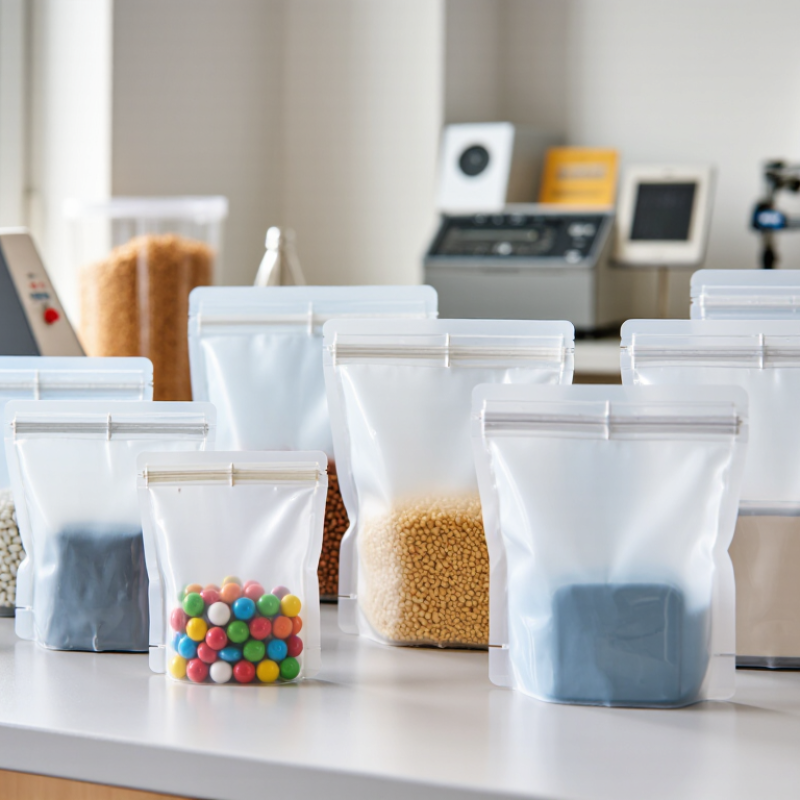
Slider zipper bags are flexible pouches sealed with interlocking plastic tracks and a movable slider. The slider closes the opening more evenly than fingers alone. Most versions use polyethylene film, although thickness and barrier layers vary. Clear film helps users inspect contents without opening the pouch. Some bags include writable panels, hang holes, or reinforced seams. In practical packaging work, these details affect convenience, leakage resistance, and shelf presentation. They are not automatically airtight. That distinction matters.
Households use them for snacks, cut vegetables, travel toiletries, craft parts, and small household items. Businesses use larger formats for samples, components, documents, and organized kits. Food contact applications require suitable materials and controlled production. A bag can look clean yet perform poorly if the track is misaligned. Repeated opening also stresses the seal. I have found that users often judge quality by the slider’s first movement, but long-term durability deserves equal attention. Moisture, heat, sharp contents, and overfilling can reduce performance. Use should match the bag’s rated purpose.
Tips: Test the slider with dry hands before filling. Leave space above the track. Press the track closed, then move the slider slowly. For food, follow storage guidance and inspect for damage. Do not reuse a bag that has stretched, cracked, or retained strong odors. Measure the product, not just the pouch, because corners reduce usable space. This simple check is often missed. Good suppliers should provide material details, dimensions, closure testing, and application guidance.
| Evaluation Dimension | Typical Industry Data | Why It Matters | Common Application or Verification Method |
|---|---|---|---|
| Bag structure | Flexible plastic pouch with a press-to-close profile and a sliding plastic or polymer component | Allows repeated opening and closing without using a separate clip or heat sealer | Food storage, household organization, medical accessories, stationery, and small-part packaging |
| Common film materials | LDPE, LLDPE, HDPE, polypropylene, recycled polyolefin content, and multilayer barrier films | Material selection affects flexibility, clarity, puncture resistance, sealing performance, and chemical compatibility | Select according to product contact, temperature, moisture exposure, and required transparency |
| Typical film thickness | Approximately 40–120 micrometres for many general-purpose slider bags; heavier constructions may be specified for industrial use | Thicker film generally improves durability and puncture resistance but increases material use and cost | Confirm thickness by micrometre measurement at multiple points across the pouch |
| Closure performance | Closure should engage continuously across the opening and remain attached during normal handling | A consistent profile reduces leakage, accidental opening, and product contamination | Evaluate opening and closing force, slider travel, seal continuity, and leakage under the intended load |
| Bag formats | Flat pouches, gusseted pouches, stand-up formats, three-side-seal bags, and custom die-cut shapes | The format determines usable volume, shelf presentation, storage efficiency, and filling-line compatibility | Specify finished width, length, gusset depth, opening size, and tolerance before production |
| Size range | Small parts pouches can be below 100 mm wide; household and retail formats commonly range from roughly 100–400 mm wide | Correct sizing prevents excessive headspace and reduces stress on the zipper during filling | Use the product’s dimensions, fill weight, bulk density, and required free space to define the bag size |
| Barrier requirements | Standard polyolefin films provide limited-to-moderate moisture and gas protection; multilayer films can provide higher barriers | Barrier performance affects shelf life, aroma retention, oxidation control, and moisture protection | Request oxygen transmission rate and water-vapor transmission rate data when barrier protection is important |
| Printing capability | Flexographic and rotogravure printing are commonly used; digital printing is suitable for shorter or variable runs | Printing method influences image quality, setup cost, minimum order quantity, and lead time | Confirm print colors, repeat length, ink suitability, artwork tolerances, and food-contact requirements |
| Food-contact suitability | Food-contact packaging must comply with the regulations applicable in the destination market and with the intended food type | Compliance depends on the complete structure, including film, inks, adhesives, zipper, and processing conditions | Request declarations of compliance and supporting migration documentation for the target market |
| Material regulations | Common references include United States FDA food-contact rules and European Union Regulation (EU) No. 10/2011 for plastic food-contact materials | Regulatory acceptance is determined by destination, product type, and conditions of use | Verify current legal requirements with the importer, regulatory adviser, or competent authority |
| Quality-control tests | Dimensional inspection, visual inspection, seal strength, tensile properties, puncture resistance, drop testing, and leakage testing | Testing identifies defects that may cause zipper failure, splitting, leakage, or poor filling-line performance | Relevant methods may include ASTM F88 for seal strength, ASTM D882 for tensile properties, and ASTM D1709 for impact resistance |
| Sustainability options | Lightweighting, mono-material polyolefin structures, post-consumer recycled content where permitted, and downgauging are common approaches | Environmental performance depends on material sourcing, manufacturing, transport, use, and local recycling infrastructure | Request recycled-content evidence, recyclability guidance, life-cycle information, and destination-market labeling requirements |
| Manufacturing flexibility | Capabilities may include custom dimensions, different zipper profiles, gussets, hang holes, rounded corners, tear notches, and printed artwork | Flexible production supports product-specific packaging and reduces the need for secondary packaging components | Compare sample approval procedures, tooling requirements, minimum order quantities, tolerances, and production lead times |
| Recommended supplier-selection criteria | Documented quality system, traceable raw materials, validated food-contact status where required, stable zipper performance, and repeatable dimensional control | These factors are more meaningful than price alone when bags are used for food, medical, export, or high-volume applications | Use approved samples, written specifications, batch records, inspection plans, and corrective-action procedures before placing recurring orders |
Note: Specifications shown are general industry reference ranges and should be confirmed against the final product, destination-market regulations, and agreed manufacturing specification.