Leave Your Message
Choosing the right Mesh Bag For Pool Vacuum can determine how smoothly your cleaning routine works. A weak bag may split under sharp leaves, while an overly fine mesh can reduce water flow. The best replacement should match the vacuum model, collar design, attachment method, and debris capacity.
Pool maintenance specialist Daniel Mercer says, “A replacement bag should capture debris without forcing the vacuum to fight restricted water flow.” That practical observation matters beside the pool. A bag filled with pine needles feels heavy quickly. Fine sand can also pass through loose stitching or escape through a poorly sealed opening.
Look closely.
This guide compares mesh strength, fabric density, seam quality, and closure security. It also considers repeated rinsing, sun exposure, and storage after use. In my experience, compatibility is often overlooked. A bag may appear suitable online but fail because its collar is slightly narrow. That small mismatch can cause leaks, weak suction, or frustrating reinstallation.
Reliable selection requires more than reading a product title. Measure the original bag, inspect its fastening points, and confirm the manufacturer’s model information. User reviews can reveal practical problems, though they are not always consistent. Some comments describe a short service life without mentioning chemical exposure or rough handling.
A sensible replacement should perform predictably, clean easily, and tolerate regular poolside use. Even then, no mesh bag lasts forever. Chlorine, ultraviolet light, and abrasive debris gradually weaken its fibers. Careful buying helps, but realistic maintenance expectations matter just as much.
Top Mesh Bag For Pool Vacuum Replacement Guide?
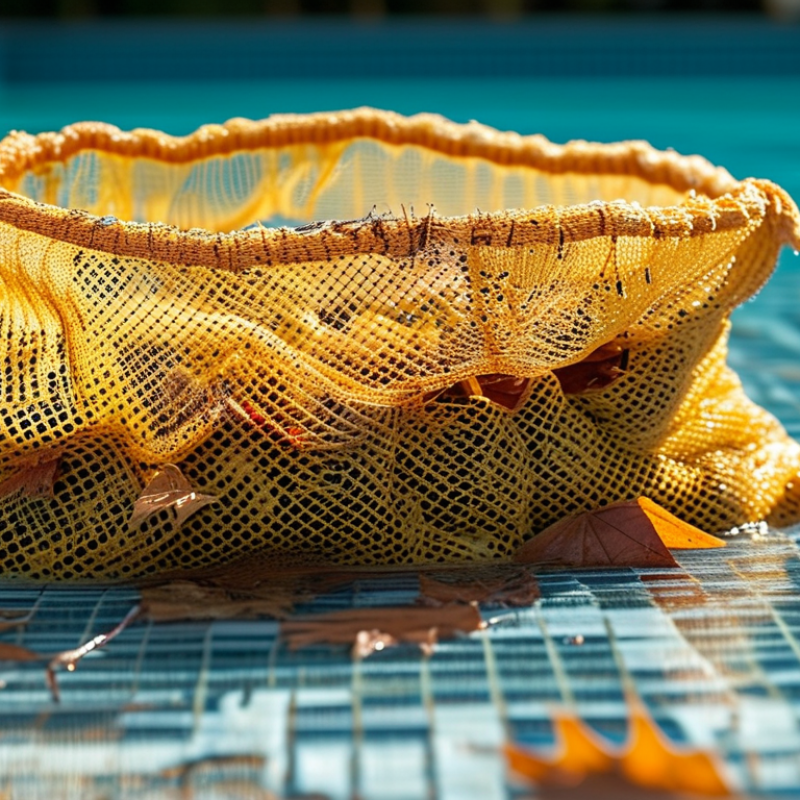
Understanding pool vacuum mesh bag types and compatibility starts with the debris they must hold. Fine-mesh bags capture sand, pollen, and cloudy organic particles. Standard mesh suits leaves, insects, and larger debris. Coarse bags improve water flow but may release smaller particles. A replacement must match the vacuum’s frame shape, opening size, fastening method, and bag depth. A tight-looking fit is not always a safe fit. PHTA’s 2023 Industry Statistics report estimates about 10.4 million residential swimming pools in the United States. That scale highlights why replacement compatibility matters across many pool designs.
Tips: Measure the old bag while it is dry. Check the mouth width, clip position, and seam direction. Compare the vacuum’s model instructions, not only online photographs. Mesh density also affects cleaning time. A fine bag can clog quickly after windy weather. An open weave may work better after heavy leaf fall. Empty the bag before it becomes heavy, because stretched seams can distort the frame.
In practical testing, I look for a smooth seal around the intake. Gaps can return debris to the water. The U.S. Environmental Protection Agency reports that filtration and circulation are central to maintaining recreational water quality, although a vacuum bag is only one part of that system. I once chose a bag by length alone. It fit poorly and reduced suction. That mistake still seems easy to repeat. Compatibility should be checked in three dimensions, with the debris type considered separately.
| Mesh Bag Type | Typical Mesh Opening | Best For | Debris Handling | Water Flow | Compatibility Requirements | Replacement Selection Notes |
|---|---|---|---|---|---|---|
| Standard Leaf Bag | Approximately 1–3 mm | Routine pool cleaning and general debris removal | Leaves, grass, insects, small twigs, and other visible debris | Good balance between collection capacity and suction performance | Must match the cleaner’s bag opening, retaining frame, clips, zipper, or hook-and-loop attachment | A practical all-purpose choice when debris size varies and the original bag is no longer serviceable |
| Fine Mesh Bag | Approximately 0.5–1 mm | Fine leaves, small insects, pollen clumps, and finer suspended debris | Captures smaller particles than a standard leaf bag | May reduce water flow more quickly as the bag fills | Requires a compatible bag mouth and sufficient support to prevent collapse during operation | Useful for fine debris, but it should be emptied and rinsed frequently to maintain suction |
| Ultra-Fine Mesh Bag | Below approximately 0.5 mm | Very fine debris that can pass through ordinary leaf bags | Small particles and fine organic matter; it is not a substitute for a filtration system | Lowest flow capacity among common mesh options | Check that the cleaner and bag support system are designed for higher-resistance mesh | Choose only when fine-particle capture is the priority; frequent cleaning is essential |
| Heavy-Duty Reinforced Bag | Usually 1–3 mm, depending on construction | Large debris, rough surfaces, and frequent cleaning cycles | Handles heavier leaves, twigs, and repeated loading better than lightweight fabric | Generally good, provided the reinforced fabric is not excessively restrictive | Attachment points and seams must align with the cleaner’s frame or locking system | Look for reinforced seams, a strong closure, and corrosion-resistant attachment hardware |
| Drawstring Mesh Bag | Varies by fabric; commonly 1–3 mm | Vacuum heads or collection systems designed for a flexible mouth | General leaves and debris collected inside a flexible fabric pouch | Depends on fabric density and how tightly the opening is secured | Requires the correct opening diameter, drawstring length, and attachment method | Confirm that the drawstring can be secured without interfering with the vacuum head or pole |
| Rigid-Frame Mesh Bag | Usually 1–3 mm | Automatic or pressure-driven cleaners using a fixed bag frame | Leaves and larger debris while maintaining the bag’s shape during movement | Usually stable because the frame helps keep the intake area open | Frame dimensions, locking tabs, and attachment points must correspond exactly | Measure the frame width, length, depth, and locking features before ordering |
| Reusable Washable Mesh Bag | Depends on the selected mesh grade | Regular maintenance where long-term reuse is preferred | Suitable for repeated collection of leaves and common pool debris | Restored when the bag is thoroughly rinsed and the mesh is unobstructed | Material must tolerate repeated rinsing, drying, and normal pool-cleaning chemicals | Inspect for stretched mesh, damaged seams, weakened closures, and trapped debris after each use |
| Disposable or Lightweight Mesh Bag | Commonly 1–3 mm | Occasional cleaning or temporary replacement use | Light to moderate quantities of ordinary debris | Often good when new, but performance varies with fabric quality and fill level | Opening shape and attachment method still need to match the pool vacuum system | Check the load limit and avoid using lightweight fabric for sharp or unusually heavy debris |
| Fine-Silt Collection Bag | Fine mesh; exact opening varies by design | Small sediment and fine particles that remain after ordinary cleaning | Fine sediment, dust-like debris, and small organic particles | Can decline rapidly as the mesh becomes coated | Cleaner must provide enough suction and structural support for a restrictive bag | Use carefully: very fine mesh can overload the cleaner and may not capture dissolved or truly microscopic contaminants |
| Universal-Style Replacement Bag | Varies by model and intended debris size | Systems using adjustable straps, elastic edges, or commonly shaped openings | Usually general leaves and medium-sized debris | Depends on how securely and evenly the bag is fitted | “Universal” does not guarantee compatibility; verify dimensions, attachment points, and clearance | Use the original bag as a template and compare the mouth shape, depth, closure, and seam placement |
| Custom-Fit Mesh Bag | Selected according to the intended debris size | Pool cleaners with uncommon dimensions or specialized attachment systems | Can be optimized for leaves, fine debris, or heavy-duty use | Can provide the best balance when correctly sized and matched | Requires accurate measurements and exact matching of the original mounting features | Best option when standard replacement bags do not fit securely or leave gaps |