Best Tips for Choosing the Right Slider Zipper Bag for Your Needs?
When selecting the right Slider Zipper Bag, understanding your specific needs is crucial. The global market for zipper bags has seen significant growth, with a projected increase from $2.5 billion in 2020 to $4.2 billion by 2027, according to industry reports. This surge highlights the importance of knowing the various materials, sizes, and closure types available in the market.
A well-chosen Slider Zipper Bag can enhance the efficiency of packaging and storage processes. However, many consumers tend to overlook critical features such as durability and seal quality. Research indicates that bags made from high-density polyethylene (HDPE) are more resistant to punctures and tears, offering better protection for contents. Choosing the wrong bag can lead to waste and dissatisfaction.
It is also essential to consider environmental impact when selecting Slider Zipper Bags. Many brands now offer biodegradable options. However, not all biodegradable bags perform equally. Customers should be cautious and conduct thorough research. The right decision will require balancing functionality, durability, and sustainability.
Understanding Different Types of Slider Zipper Bags Available in the Market
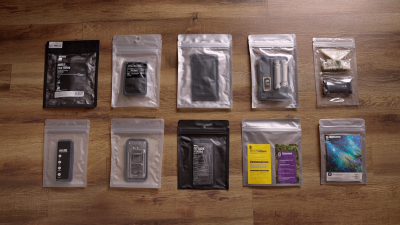
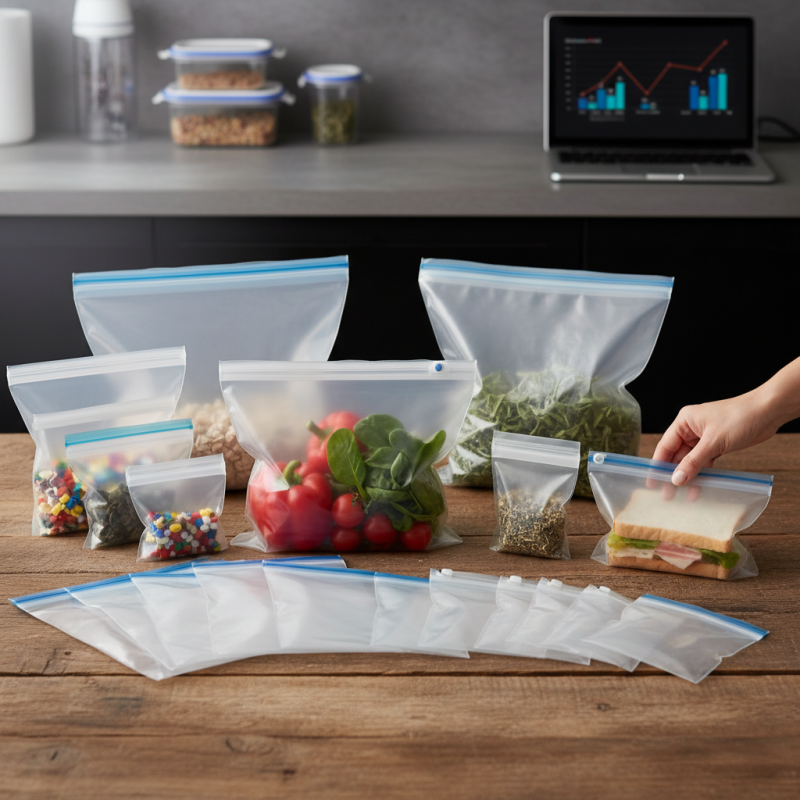
Slider zipper bags come in various types, catering to different needs. Understanding these types is crucial for making an informed choice. The most common categories include standard storage bags, freezer bags, and specialty bags like sandwich or snack bags. According to a recent market analysis, the global demand for slider zipper bags is projected to grow by 4.2% annually, reflecting their increasing popularity among consumers.
Standard storage bags are versatile for everyday use, ideal for organizing items. Freezer bags, designed with thicker material, are essential for long-term food storage. They prevent freezer burn, ensuring food quality. Specialty bags offer convenience for specific purposes. For example, sandwich bags are great for lunches while snack bags are perfect for on-the-go munching.
However, selecting the right bag also involves weighing price, quality, and environmental impact. The industry has seen a rise in eco-friendly options, driven by consumer preference for sustainable products. Yet, some bags may not perform as well as others in sealing or durability. Consumers should read reviews and seek recommendations to find reliable options that suit their needs. Reflecting on this knowledge can lead to better purchasing decisions in the future.
Assessing the Material Quality for Durability and Safety of Usage
When selecting slider zipper bags, material quality is paramount. A robust bag should resist tearing and puncturing. Look for bags made from polyethylene or polypropylene. These materials offer good durability for various uses. Consider thickness too. Thicker bags usually provide more strength. Thin bags may rip easily under heavy loads.
Safety is another critical factor. Ensure that the material is food-safe if you plan to store edibles. Some bags may contain harmful chemicals. Research standards and certifications when possible. Not all bags are created equal. A reputable source can help guide your choice. However, do not assume all brands meet safety guidelines.
Reflect on your specific needs. A heavy-duty bag may be overkill for light storage. Conversely, using a standard bag for heavy objects can lead to accidents. Think about how often you'll use the bags. If they’ll see frequent action, investing in higher quality is wise. However, if it’s just occasional use, balance cost and quality carefully.
Best Tips for Choosing the Right Slider Zipper Bag for Your Needs
| Feature |
Material Type |
Durability Rating |
Food Safety |
Temperature Resistance |
| Thickness |
PEVA |
High |
Yes |
-40°C to 60°C |
| Compostability |
PLA |
Medium |
Yes |
-10°C to 50°C |
| Transparency |
HDPE |
High |
Yes |
-20°C to 80°C |
| Sealing Quality |
Polypropylene |
Medium |
Yes |
-10°C to 70°C |
Evaluating Size and Capacity for Your Specific Storage Needs
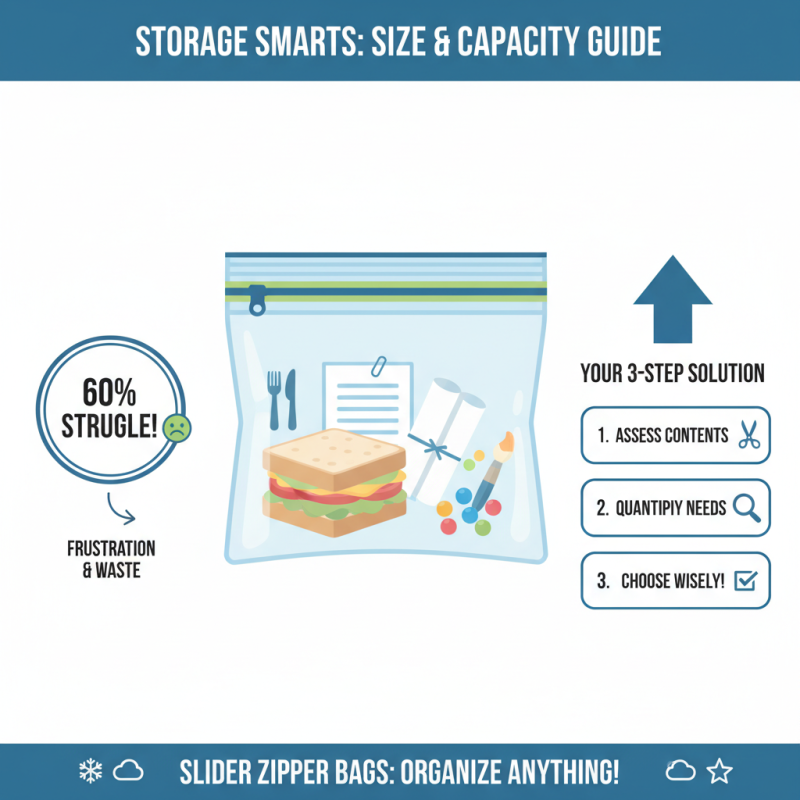
When selecting slider zipper bags, assessing size and capacity is crucial. Various studies indicate that 60% of users struggle with choosing the right dimensions. This often leads to frustration and wasted resources. The first step is to evaluate what you plan to store. Whether it’s food, documents, or craft supplies, knowing your needs will guide your choice.
The capacity of a bag often dictates its usability. Most slider zipper bags come in quart, gallon, and even larger sizes. Research shows that bags sized appropriately for their contents prevent damage and spoilage. For instance, using a too-large bag can expose food to air and moisture, diminishing its freshness. On the contrary, overly snug bags can lead to tearing, making them unsuitable for long-term storage.
Additionally, be aware of the actual dimensions. A bag labeled as “gallon” might not fit all items within its stated capacity. Careful measurement can avoid this problem. Industry reports emphasize that around 30% of consumers underestimate their storage requirements, leading to inefficient organization. Reflect on how you use your space and adapt your bag choices accordingly. Striking the right balance between size and capacity can enhance your storage solutions significantly.
Features and Benefits to Look for in Slider Zipper Bags
When choosing slider zipper bags, several features and benefits are crucial to consider. First, ensure the bag is made from high-quality materials. Durable, tear-resistant plastic prevents leaks and protects contents. Transparency is essential for easy identification of items without opening the bag. Look for bags with reinforced seams, which add strength and durability.
Another important aspect is the size and dimensions of the bag. Depending on your needs, you may require various sizes for different items. A versatile set can cater to food storage, organizing craft supplies, or even holding travel toiletries. A thoughtful selection ensures you have the right bag ready for any situation.
Finally, consider the sealing mechanism. A sturdy slider mechanism provides a reliable closure. This feature enhances security and maintains freshness, especially for food items. Reflecting on these details can lead to better choices. Some bags may seem adequate at first but might fail under pressure. Taking the time to find the right slider zipper bag pays off in the long run.
Tips for Budgeting and Selecting Cost-Effective Options
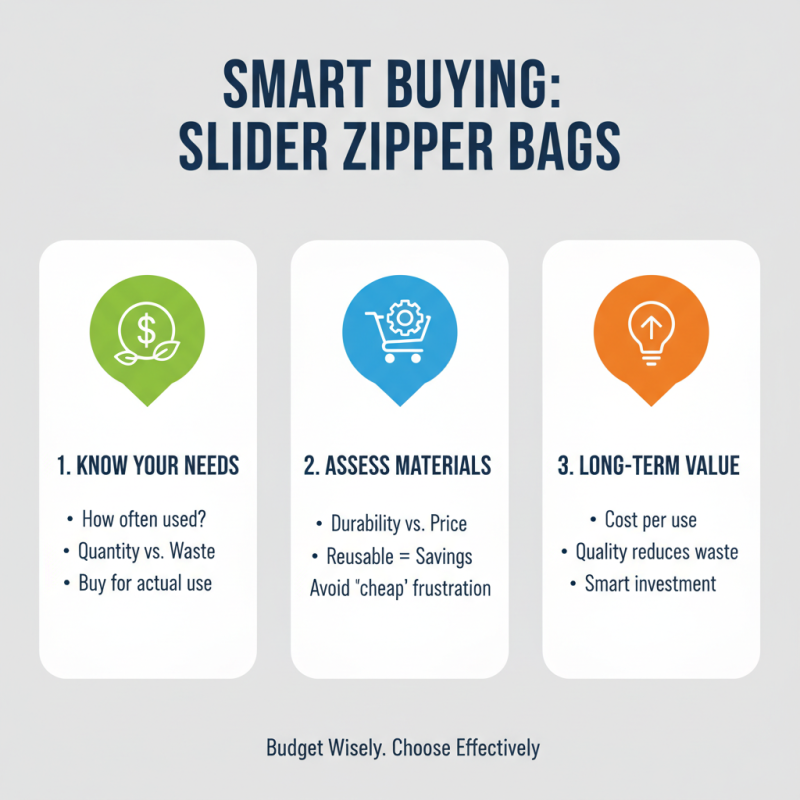
When budgeting for slider zipper bags, it's key to know your needs and usage. Consider how often you will use them. A larger quantity may seem cost-effective but can lead to waste if not utilized. Assess the materials used in the bags, as this impacts both durability and price. Cheaper bags might not withstand repeated use, leading to frustration and increased costs in the long run.
Look for alternative purchasing options. Buying in bulk can save money and provide a consistent supply. However, buying too many at once can lead to space issues. Pay attention to the closure mechanism. Some bags might be less reliable, causing spills and messes. Balancing price with quality is essential; cheap choices can backfire.
Keep an eye on seasonal sales and discounts. Timing your purchase can significantly impact your budget. Don't forget to read reviews. They often highlight both strengths and weaknesses. Consider experimenting with different sizes and styles in smaller quantities to find what truly fits your needs. This approach minimizes risk while maximizing your budget's efficiency.