How to Choose the Right Slider Zipper Bag?
Choosing the right Slider Zipper Bag is less about picking the thickest option and more about matching the bag to its actual job. A snack portion, a handful of screws, and a damp swimsuit place very different demands on packaging. Small details matter. The bag should leave enough room to close the track without stretching it. Its material and thickness should suit the item’s weight, edges, and storage conditions. A zipper that feels smooth in a sample may still be awkward with wet or gloved hands. Test it.
For a practical comparison, consider capacity, seal performance, clarity, flexibility, and how often the bag will be reused. Check product specifications, then inspect a sample with the item inside. A label alone cannot show whether the slider stays aligned or the corners split under pressure. For businesses, consistent sizing and supplier quality can matter as much as unit price. Food-contact applications call for products specifically identified by the supplier for that use. Follow the stated storage instructions, too. “Water-resistant” does not automatically mean leakproof. That distinction is easy to overlook. There is no single best Slider Zipper Bag for every purpose, and appearance alone is a poor basis for choosing one. The sections below explain how to compare common features and make a decision grounded in real use, not guesswork.
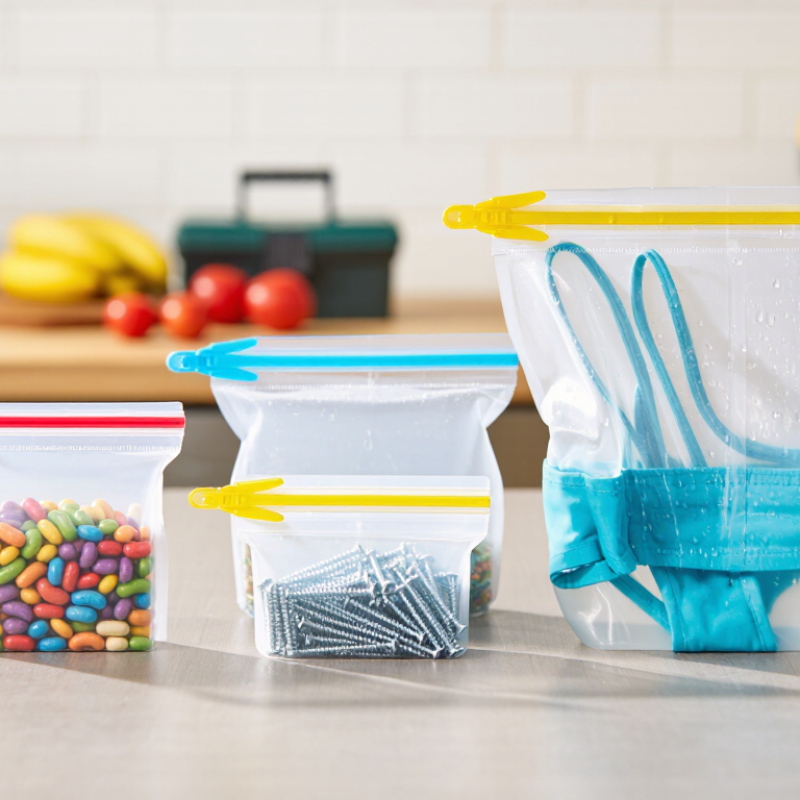
Understanding Slider Zipper Bags and How They Work
A slider zipper bag uses two flexible plastic tracks along its opening. Inside the tracks are matching ridges, often called profiles. When pressed together, they interlock and help keep the contents contained. A small slider travels along the tracks, guiding them apart when opened and together when closed.
That little movement matters. If the slider starts crooked, one side may remain partly open. Look along the entire seal for gaps, especially near the ends. Crumbs, powder, or a folded corner can also interrupt the tracks. A gentle tug can reveal a weak closure, but it does not prove the bag is leakproof. Not all bags are designed to hold liquids.
The slider is convenient when a bag will be opened and closed often. It can be easier to use than pressing a seal with your fingers, especially with cold or damp hands. Still, a bulky slider may take up more space in a drawer, and damaged tracks can be difficult to repair. I find it easy to trust the click too much. Check the seal by sight and touch, and choose a bag size that lets the contents sit below the zipper rather than pushing against it.
Defining the Bag’s Intended Use and Contents
Start by naming the bag’s actual job. Will it hold a sandwich for a few hours, sort craft pieces in a drawer, or keep travel toiletries together? The contents determine the size, material, and closure you need. Measure the widest item, then leave a little room around it. A bag that fits exactly can strain at the seams when filled.
Think about weight, moisture, and how often you will open it. Dry snacks need different protection from damp produce, while small screws or beads need a closure that stays shut during handling. That matters. A slider is convenient for repeated access, but it does not automatically make a bag leakproof or suitable for every temperature. Check the product’s stated use, especially for food storage or freezing. It is tempting to choose the thickest bag for every task, but that can add bulk without solving the real problem. A better choice matches the bag to its contents. Small detail. If you are unsure, test one bag with the intended items before buying a larger quantity. Notice whether the slider moves smoothly and whether the filled bag sits flat in your storage space.
How to Choose the Right Slider Zipper Bag
Start with what you plan to store. These approximate content volumes provide a practical reference when choosing a bag; allow extra room for item shape and an easy-to-close zipper.
Planning estimates: the sandwich is based on dimensions of 12 × 12 × 3 cm; the A5 notebook on 14.8 × 21 × 1.5 cm; and the toiletry set assumes three 100 mL bottles with space for their containers. Actual fit depends on the bag’s internal dimensions and the contents’ shape.
Selecting the Right Material, Size, and Capacity
A slider zipper bag works best when its material matches what you plan to store. For dry snacks or small craft supplies, lightweight polyethylene can be flexible and easy to handle. Items with sharp edges may need a thicker film to reduce punctures. If contents are damp, check that the bag is designed to resist moisture; a zipper alone does not guarantee a leakproof seal. Clear material also helps you spot contents quickly, though it may offer less protection from light.
Size should leave room to close the slider without stretching the bag. Measure the item at its widest point, then allow space above it for the closure. Capacity labels can be misleading because they often describe volume, not usable dimensions. A bulky item may not fit even when its stated volume seems suitable. Choosing a bag that is much too large can waste storage space, too. The right choice may take a little testing.
Tips: Compare the bag’s interior dimensions with your item, not just its overall size. Try one sample before buying a large quantity. Press along the slider after filling, and check that no contents sit in the track. For repeated use, inspect the zipper and film for wear; a bag can look fine while its seal has weakened. Decide whether visibility, flexibility, or extra thickness matters most for your everyday use.
Comparing Closure Quality and Additional Features
How to Choose the Right Slider Zipper Bag?
Closure quality matters more than a smooth-looking slider. Move it across the track several times; it should glide evenly without snagging or leaving gaps. Press along the zipper with your thumb, especially near the corners. A slider helps guide closure, but it does not prove the bag is airtight. For moisture-sensitive products, check the film’s barrier specifications and test filled samples under real storage conditions.
Extra features should solve a clear handling problem. A tear notch can make opening easier, while a transparent window helps users see what remains. Hang holes suit retail displays, but they can weaken the top edge if poorly placed. The Flexible Packaging Association’s 2023 State of the U.S. Flexible Packaging Industry report valued U.S. flexible-packaging shipments at $42.9 billion in 2022, about 21% of the packaging market. That scale reflects varied uses, not a guarantee that every feature fits every product. I still find this easy to overlook.
Tips: Test the bag with your actual product. Fill it, close it, store it, then reopen it several times. Check for crumbs in the track, leakage, and slider wear. Small detail. Big difference.
Checking Safety, Reusability, and Environmental Impact
A slider zipper bag should feel dependable before it is reused. For food, check that the packaging identifies it as suitable for food contact, and follow any stated use limits. A bag made for storage may not be designed for hot food or microwave heating. Look closely at the slider, seams, and corners; a split seam can leak even when the closure seems secure. Check the seal. Small detail, big difference.
Reusability depends on what the bag held and how well it cleans. Wash it with warm, soapy water, then dry it fully with the opening spread apart. Trapped moisture can encourage odors or residue. Retire bags with cracks, cloudy patches, sticky surfaces, or a slider that no longer closes firmly. I have found that drying takes longer than expected, especially around the zipper track. It is easy to rush this part.
Environmental impact is less simple than a recycling symbol suggests. Reusing a sound bag can reduce how often you replace it, but local recycling programs may not accept flexible film or mixed-material closures. Check your local collection guidance rather than assuming it belongs in a curbside bin. A reusable option also has an environmental cost during manufacture, so its benefit depends partly on how often it is used. That trade-off deserves a little thought.