2026 Top Uses for Blank Aluminum Foil Bags?
In the world of packaging, the Blank Aluminum Foil Bag stands out for its versatility. This unique product is used across various industries, from food to cosmetics. Its potential applications are limitless, and 2026 will likely see even more innovative uses.
Businesses appreciate how these bags protect contents from moisture and light. They are perfect for preserving freshness and enhancing shelf life. However, some enterprises may overlook their potential due to a lack of creativity. Not all companies fully utilize the benefits of a Blank Aluminum Foil Bag, which can lead to missed opportunities.
Consider the industries that rely heavily on packaging. Food producers, for instance, thrive on the durability of these bags. Yet, some still stick to traditional methods. This hesitation could stem from a fear of change or an inability to envision new possibilities. Embracing the Blank Aluminum Foil Bag can transform their approach, but not all are ready to take that leap.
Top Benefits of Using Blank Aluminum Foil Bags in Various Industries
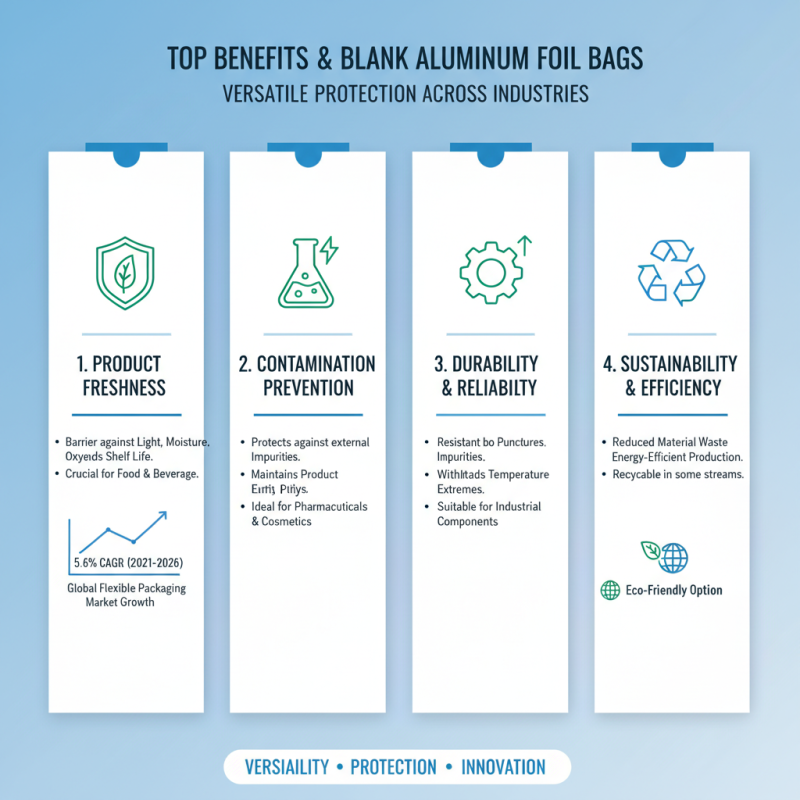
Blank aluminum foil bags have gained significant traction across various industries due to their versatility and protective qualities. According to industry reports, the global demand for flexible packaging, which includes aluminum foil bags, is expected to grow at a CAGR of 5.6% from 2021 to 2026. This trend highlights the benefits of aluminum foil bags, particularly in food and beverage sectors, where product freshness is critical. These bags provide a barrier against light, moisture, and oxygen, ensuring that items remain uncontaminated.
In the pharmaceutical industry, aluminum foil bags are valued for their durability and safety. Packaging experts indicate that over 70% of pharmaceutical products benefit from foil packaging. This material helps in maintaining the integrity of medicines while preventing exposure to environmental factors. This means longer shelf life and reduced waste, yet many companies still overlook these options, sticking to less effective materials.
Sustainability is also a growing concern. Studies show that aluminum can be recycled indefinitely without quality loss. However, the recycling rates remain below potential in many regions. Businesses are encouraged to embrace these eco-friendly packages but often hesitate. There is an urgent need for education on recycling processes and disposal methods to harness the full potential of aluminum foil bags.
Common Applications of Blank Aluminum Foil Bags for Food Storage
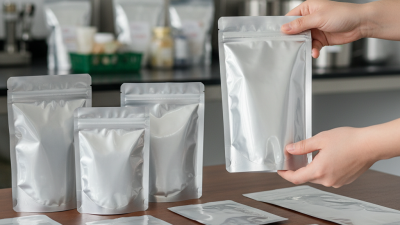
Blank aluminum foil bags are versatile for food storage. They provide an airtight seal that keeps food fresh longer. These bags are resistant to moisture, light, and oxygen. This helps prevent spoilage and contamination. They can store dry foods like grains, nuts, and spices effectively.
Many also use these bags for marinating foods. The bags can be sealed tightly, allowing the flavors to infuse better. You can easily lay the bags flat in the fridge, saving space. Some people overlook the convenience of these bags for meal prep. They make it simple to pack lunches and snacks. However, ensuring proper sealing is crucial to avoid leaks.
Not everyone knows how to use them correctly. Overfilling bags can lead to spills and messes. It's essential to leave enough space at the top. Also, not all foods are suitable for long-term storage in these bags. Items with high moisture content may cause issues. Paying attention to these details can enhance their effectiveness.
Innovative Uses of Blank Aluminum Foil Bags in Packaging Solutions
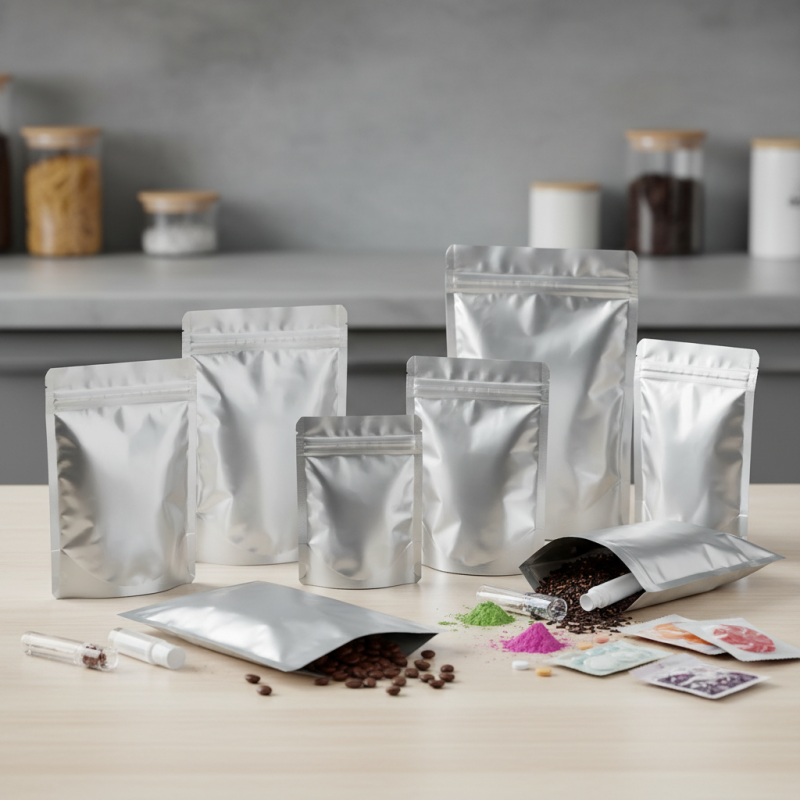
Blank aluminum foil bags have gained popularity due to their versatility in packaging solutions. These bags offer excellent protection against moisture, light, and air, making them ideal for storing food and other sensitive items. For instance, snacks like nuts or dried fruits can stay fresh longer. The reflective surface also adds a layer of visual appeal. However, the effectiveness can vary. Not all bags maintain the same barrier levels.
Another innovative use is in the beauty industry. These bags can package products like shampoos or lotions, ensuring they remain uncontaminated. Their lightweight nature makes them easy to transport. Yet, users may find the durability lacking under certain conditions. It's important to test different materials for better results.
Beyond food and beauty, blank aluminum foil bags have potential in electronics too. Small components can be safely stored, protected from static and moisture. However, the market sometimes overlooks the need for labeling. Proper identification can prevent confusion. Overall, while blank aluminum foil bags showcase a range of uses, their effectiveness often hinges on the specific application and attention to detail.
2026 Top Uses for Blank Aluminum Foil Bags
| Use Case |
Description |
Advantages |
Industries |
| Food Packaging |
Used to package snacks, dried fruits, and coffee. |
Keeps food fresh and extends shelf life. |
Food & Beverage |
| Chemical Storage |
Containers for various chemicals that require moisture and light protection. |
Prevents chemical degradation and contamination. |
Manufacturing, Chemicals |
| Cosmetic Samples |
Used for packaging samples of creams and lotions. |
Attractive presentation and protection from contamination. |
Beauty, Cosmetics |
| Pharmaceuticals |
Secure packaging for pills and supplements. |
Ensures product integrity and compliance with regulations. |
Pharmaceuticals, Health |
| Craft Projects |
Used in various DIY crafts and art projects. |
Versatile and easy to manipulate for creative uses. |
Arts & Crafts |
Sustainability Aspects of Blank Aluminum Foil Bags in Eco-Friendly Practices
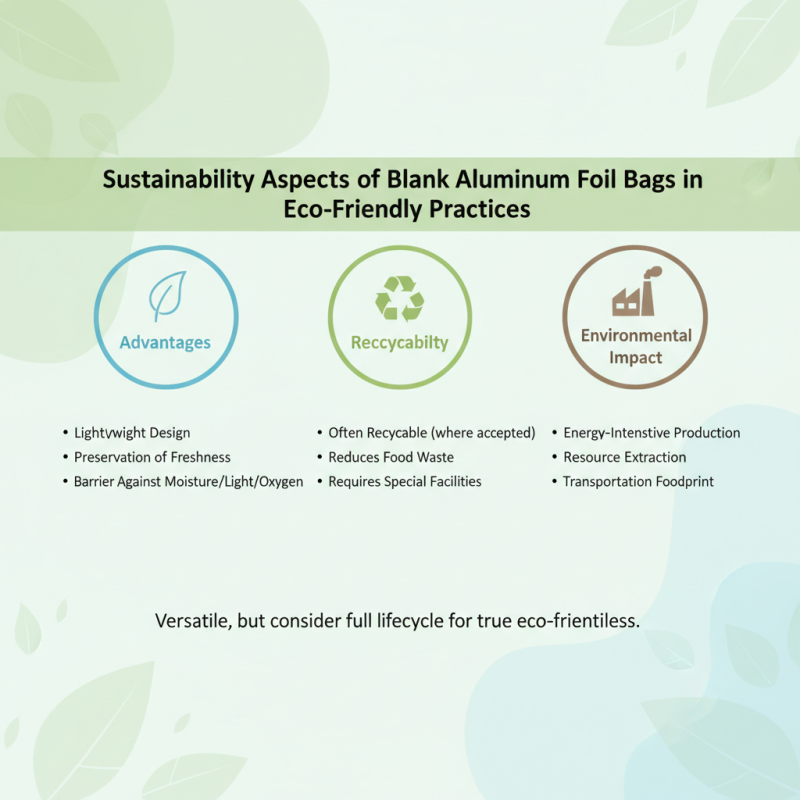
Blank aluminum foil bags have emerged as versatile packaging solutions in various industries. Their lightweight design and ability to preserve freshness make them attractive options. However, when considering sustainability, several factors come into play.
According to a recent report, aluminum packaging can be recycled a staggering 95% of the time. This recycling potential is critical, as it significantly reduces landfill waste. Yet, the energy required for aluminum production remains high. It’s essential to evaluate the entire lifecycle of the product. Some companies are aiming to use 30% recycled aluminum in their packaging by 2026. This could drastically lower carbon emissions associated with new aluminum production.
On the downside, the production process can be resource-intensive. Many manufacturers need to address this issue actively. While aluminum foil bags offer advantages, closed-loop systems must be in place to recycle them effectively. Consumers have a role too. They must ensure proper disposal and recycling of these bags. Behavior changes can significantly impact how environmentally friendly these packaging solutions really are.
Design Considerations for Customizing Blank Aluminum Foil Bags
When customizing blank aluminum foil bags, design considerations play a crucial role. These bags provide excellent barrier properties against moisture, oxygen, and light. According to industry reports, 30% of consumer preference is based on packaging design. Visual appeal can influence purchasing decisions. Colors, shapes, and finishes are essential.
Eco-friendly materials are also gaining traction. A recent study indicated that 52% of consumers prefer sustainable packaging. Companies must reflect this trend when designing aluminum foil bags. Using recyclable materials can enhance brand image. However, the balance between aesthetics and functionality is delicate. A beautiful design should not compromise the bag's integrity.
Testing prototypes is vital. It highlights issues before mass production. Feedback from focus groups can reveal important insights. Often, designs will need revisions. It's normal to revisit and adjust based on real-world performance. Design isn't a one-time task; it’s an evolving process that demands attention.