How to Use Vacuum Storage Bags for Pillows?
Storing pillows well is harder than it looks. A pillow may seem dry outside, yet retain moisture inside. That moisture can create unpleasant odors during long storage. Vacuum Storage Bags For Pillows can reduce bulk, protect against dust, and free valuable closet space. However, they are not a perfect solution.
Professional organizer and author Peter Walsh offers a useful principle: “You can’t organize clutter; you have to get rid of it.” This idea matters here. Do not seal pillows that are stained, damp, or already losing their shape. Check the care label first. Memory foam, latex, and specialty pillows may require different storage methods. Vacuum compression could damage their structure.
This guide explains how to choose, prepare, seal, and store pillows safely. It also covers common mistakes, including overfilling the bag and forcing out too much air. A clean cotton pillowcase can add a simple protective layer. Leave space around the valve and inspect the seal carefully. Then store the bag in a cool, dry cabinet, away from sharp objects and direct sunlight.
The method is not flawless. Some pillows recover slowly after compression. Others may never regain their original loft. That small risk deserves attention. Use gentle suction when possible, and avoid storing pillows under heavy boxes. A practical check every few months can reveal leaks, odors, or permanent flattening before the problem becomes worse.
Choosing the Right Vacuum Storage Bag for Pillows
How to Use Vacuum Storage Bags for Pillows?
Choosing the right vacuum storage bag begins with the pillow’s filling. Down and feather pillows need gentler compression than polyester-filled pillows. Memory foam should not be vacuum-packed unless the care label permits it. Its structure may remain permanently distorted.
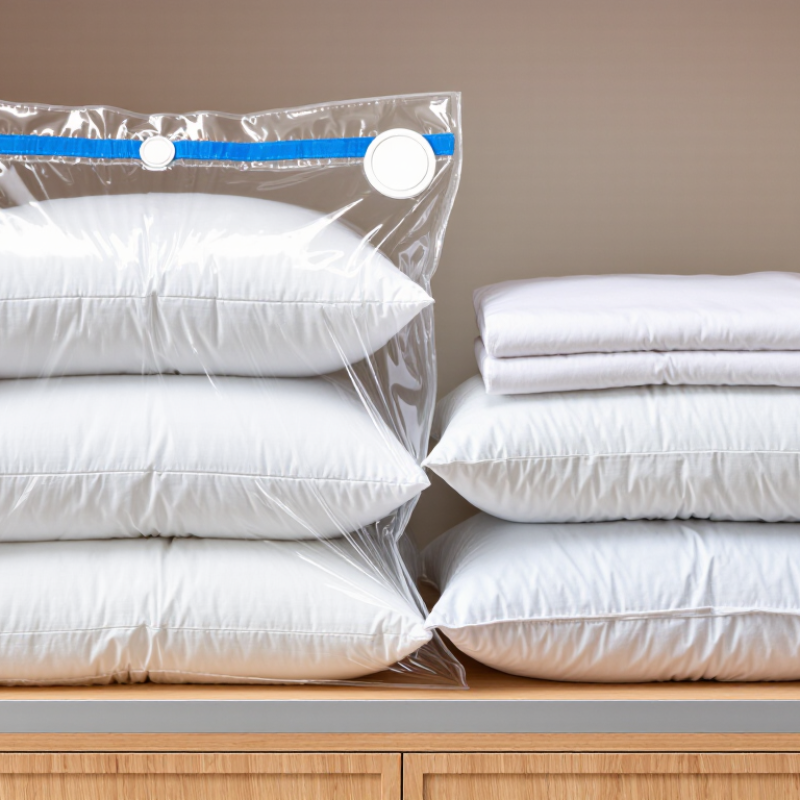
Choose a bag slightly larger than the pillow. A tight fit can crush corners and strain the seal. Look for thick, flexible plastic, a reliable zipper, and a wide valve. The valve should connect securely to a household vacuum cleaner. Transparent material also helps you check for moisture, stains, or trapped fabric.
Wash and dry the pillow completely before packing it. Even a small amount of moisture can create an unpleasant smell inside the sealed bag. Place the pillow flat, remove sharp objects, and close the zipper slowly. Vacuum the air until the pillow becomes smaller, but stop before it looks rigid. Leave some softness.
I once compressed a pillow too aggressively. It saved space, but the filling recovered unevenly. That mistake changed my storage routine. I now check the pillow after several days and release a little air if needed. Store the sealed bag in a cool, dry cupboard, away from heaters and direct sunlight. Inspect the seal occasionally. A tiny leak can reduce protection.
Preparing Pillows Before Vacuum Packing
Before placing pillows in vacuum storage bags, make sure they are completely clean and dry. Wash them according to their care labels, then dry them until no cool or damp areas remain. Moisture trapped inside can create unpleasant odors and encourage mold growth. I usually squeeze the center and corners by hand before packing. If they feel heavy or cold, they need more drying time.
Remove pillowcases and inspect every pillow for torn seams or loose filling. Repair small damage before compression. Fluff the pillow gently, but do not beat it aggressively. Down, feather, and synthetic pillows can usually tolerate moderate compression, while memory foam and latex pillows may lose their shape permanently. Check the material’s care instructions. They are more reliable than guesswork.
Choose a bag large enough for the pillow. Overstuffing can strain the seal and leave sharp corners exposed. Fold the pillow loosely, keeping its natural shape as much as possible. I once packed a slightly damp pillow in a hurry, and the smell lasted for weeks. That mistake changed my routine. I now air pillows in a bright, dry room and wait at least several hours before sealing them. Keep zippers, pins, and decorative objects away from the bag, then label each packed pillow with its material and storage date.
How to Place and Seal Pillows in the Bag
How to Use Vacuum Storage Bags for Pillows?
Choose a vacuum storage bag that is larger than the pillow’s fully expanded size. A tight bag can strain the seams and crush the filling unevenly. Check the pillow’s care label before compressing it. Memory foam and latex pillows usually should not be vacuum-sealed, because prolonged pressure may damage their shape.
Make sure the pillow is completely dry and free from loose dust. Place it inside with the broadest side facing the bag’s flat surface. Do not fold it sharply. Gently spread the corners, then leave several inches of space near the zipper. This space helps the closure seal properly. Keep the pillow away from the valve area. I once pushed a bulky pillow too close to the opening, and the zipper trapped fabric.
Close the zipper slowly from one end to the other. Press along the entire track with clean fingers, then check for gaps. Attach the vacuum nozzle to the valve without pressing too hard. Remove air gradually while guiding the pillow into an even shape. Stop when the pillow is compact, not rock-hard. Over-compression can flatten down or polyester filling. Seal the valve cap firmly and inspect the bag for hissing air. Store the sealed pillow in a cool, dry place, away from sharp objects and heavy items. Recheck it after a day. A small leak may appear later.
Removing Air Without Damaging Pillow Fillings
How to Use Vacuum Storage Bags for Pillows?
Removing air carefully matters more than removing every last pocket of air. Check the pillow’s care label before packing it. Down and polyester-filled pillows usually tolerate short-term compression, but memory foam, latex, and highly structured fillings may deform. Some never fully recover. I learned this after storing a foam pillow too tightly; its edge stayed oddly flat for days.
Use a clean, completely dry pillow. Place it inside a correctly sized vacuum bag without folding it sharply. Keep the filling spread evenly, especially around the corners. Seal the closure slowly, then attach the vacuum hose to the valve. Remove air in short bursts. Press the pillow gently with flat hands, rather than kneeling on it. Stop when the bag becomes compact but the filling still looks evenly distributed. Do not crush it into a hard block.
Watch for warning signs. If seams strain, feathers press against the plastic, or foam bends sharply, release some air immediately. A small amount of trapped air is safer than excessive pressure. Store the sealed bag in a cool, dry cupboard, away from sunlight and heavy objects. Check it after a day. Air may return slightly, which is not always a failure; the filling can settle and push against the seal. For long storage, I prefer loosening the vacuum every few weeks, though this adds work and may not be necessary for every pillow. When unpacking, open the bag fully and let the pillow regain its shape naturally. Fluff it by hand, not with force.
Storing and Refluffing Vacuum-Packed Pillows
How to Use Vacuum Storage Bags for Pillows?
Storing and Refluffing Vacuum-Packed Pillows
Vacuum storage bags save space, but pillows need gentler handling than blankets. Check the care label first. Down, polyester, and latex respond differently to compression. Never vacuum-pack memory foam or latex pillows unless the manufacturer permits it. The foam may develop permanent dents. Use a clean, completely dry pillow. Even slight moisture can create a stale smell inside the sealed bag.
EPA moisture-control guidance recommends indoor humidity between 30% and 50%. Store the sealed pillow in a cool, dry cupboard, away from sunlight and sharp objects. Do not stack heavy boxes on it. ASTM D4332 conditions textile materials at 23°C and 50% relative humidity, showing why stable storage conditions matter. The bag should reduce volume, not crush the filling for months. I once compressed a pillow too tightly. It recovered, but not completely.
When needed, open the bag slowly and remove the pillow immediately. Lay it flat for several hours. Shake it from each corner, then knead dense areas with clean hands. A low-heat dryer cycle may help synthetic filling, but only when the care label allows it. Add two clean dryer balls, and stop if the fabric feels hot. Down pillows often need repeated shaking and 24 hours of air circulation. Do not judge loft too quickly. Some pillows look flat at first, then regain shape overnight. That delay is normal, though disappointing.
How to Use Vacuum Storage Bags for Pillows?
Choose a storage bag with enough room for the pillow’s full length and width. The chart compares common pillow sizes using standard dimensions; actual measurements may vary by region and manufacturer.
Storing and Refluffing Vacuum-Packed Pillows
Place the clean, completely dry pillow inside the bag without forcing it into a small size. Remove air gradually, stop before excessive compression, and store the sealed bag in a cool, dry place. After opening, allow the pillow to expand naturally, then shake, knead, and gently fluff it. Down and polyester-filled pillows usually respond well to manual refluffing, while memory foam and latex pillows should be compressed for the shortest practical period because prolonged compression can affect their shape.