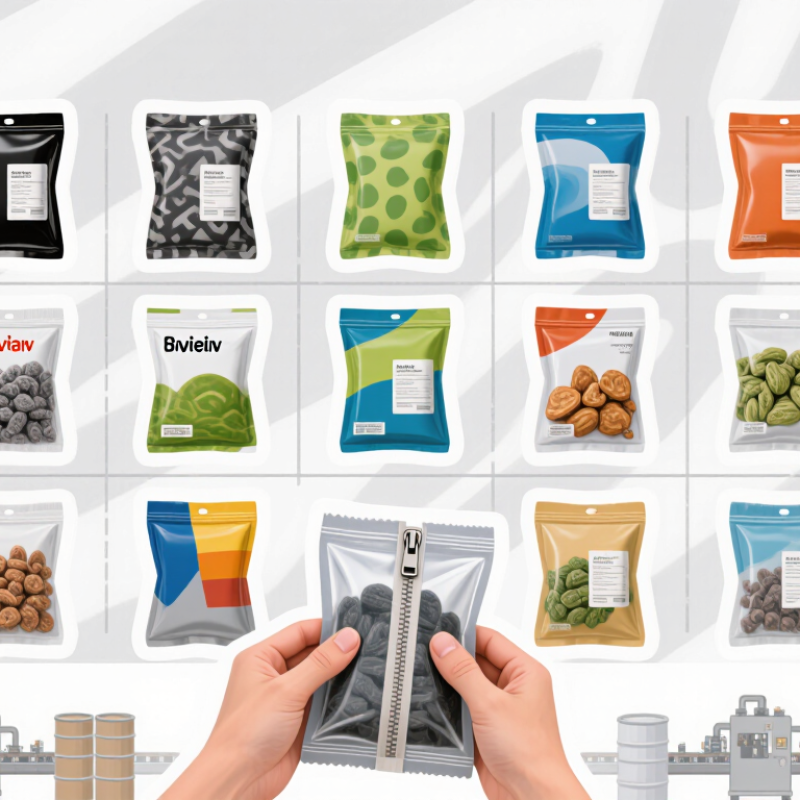
Choosing the best Printed Composite Bag supplier in China requires more than comparing prices. The right partner must protect the product, reproduce colors accurately, and communicate clearly during production. A strong supplier should explain film structures, barrier layers, adhesive systems, sealing temperatures, and printing limitations without hiding technical details.
Dr. Walter Soroka, a respected packaging technology author, emphasized, “Packaging must be evaluated as a system, not as a single material.” This principle fits Printed Composite Bag sourcing closely. A bag may look attractive under showroom lighting, yet fail when exposed to moisture, oxygen, pressure, or rough transport. Real evaluation should include material specifications, ink performance, seal strength, drop testing, and migration documentation where applicable. Ask for production samples, not only digital artwork. Inspect the pouch surface, zipper alignment, odor, color consistency, and seal edges by hand.
Experience also matters. Reliable Chinese suppliers usually provide factory photographs, quality records, traceable raw materials, and clear inspection procedures. They should discuss minimum order quantities, cylinder charges, lead times, packaging methods, and corrective actions. Sometimes, the cheapest quotation is the most expensive mistake. I have seen buyers focus on unit price and overlook weak seals or unstable color matching. That deserves reflection.
No supplier is perfect. Even an experienced factory can face material delays or printing variation. The difference is transparency, evidence, and a practical response. The best supplier is therefore not simply the largest one. It is the partner that consistently delivers safe, functional, and visually accurate Printed Composite Bag products for the intended market.
A high-quality supplier proves performance before discussing price. In practical sourcing work, I inspect print registration, sealing strength, film thickness, and roll-edge alignment. A sharp logo means little if the seal opens during filling. Details matter.
Reliable suppliers provide material specifications, production samples, and batch records. They should explain the structure clearly, such as film layers, adhesive type, and barrier properties. Ask for evidence. Test ink rub resistance with a dry cloth and check whether colors remain stable after handling. A small pilot order of 500 bags can reveal problems that samples sometimes hide.
Professional manufacturers also control moisture, dust, and temperature during production. Their quality team should record sealing temperature, pressure, and speed. Traceability matters when one batch shows uneven seals. Independent testing may confirm strength, odor, and migration requirements for the intended application. Requirements differ by market, so vague promises are not enough.
No supplier is flawless. I would still question a factory that claims zero defects. Honest communication is more useful than perfect language. A dependable partner accepts reasonable audits, responds with corrective actions, and keeps delivery records. The best choice is not always the cheapest factory; it is the supplier whose process remains stable when an order becomes difficult.
When comparing a printed composite bag supplier in China, buyers should examine structure before artwork. A PET/PE laminate offers strong graphics, toughness, and reliable heat sealing. BOPP/PP usually provides stiffness and a bright surface. For oxygen, moisture, or light-sensitive products, PET/Al/PE gives stronger barrier protection, but aluminum complicates recycling. Kraft paper with an inner PE layer feels natural, yet it can absorb moisture at rough warehouse conditions.
Material choice must match the filling line. Ask for seal-strength, puncture, drop-test, and oxygen-transmission data. A supplier should provide laboratory results, not only attractive samples. The Flexible Packaging Association reported that U.S. flexible packaging sales approached 40 billion dollars in 2023, showing the scale of this sector. However, market size does not guarantee consistent bag quality.
Printing methods deserve equal attention. Gravure printing suits large orders and detailed images, but cylinder preparation increases initial cost. Flexographic printing can reduce setup expense for moderate runs, although fine gradients may require careful plate control. Digital printing supports short runs and variable designs. Smithers projects strong double-digit growth for digital packaging print through 2028, but the technology is not automatically better. Ask about color tolerance, ink migration testing, drying performance, and waste per job. Some suppliers quote low prices while hiding cylinder charges. That deserves skepticism. A practical comparison should include material thickness, barrier values, print repeatability, minimum order quantity, inspection records, and shipment protection. Fancy artwork cannot repair a weak seal.
| Comparison Dimension | Material or Method | Typical Structure or Process | Key Performance Characteristics | Suitable Applications | Printing Compatibility | Relative Barrier Level | Relative Cost Level | What Buyers Should Verify |
|---|---|---|---|---|---|---|---|---|
| Flexible Packaging Material | PE-Based Laminate | PE sealant layer combined with a printable or reinforcing film such as PET or oriented PE. | Good heat-sealing performance, flexibility, moisture resistance, and puncture resistance. Recyclability depends on the complete structure and local recycling system. | Frozen food, agricultural products, household products, powders, and general-purpose pouches. | Flexographic, rotogravure, and digital printing can be used on the printable outer web. | Low to medium | Low to medium | Seal temperature range, coefficient of friction, drop-test results, film gauge, and compatibility with the filling machine. |
| Flexible Packaging Material | PP-Based Laminate | PP sealant layer combined with BOPP or another oriented polypropylene film. | Good moisture resistance, stiffness, clarity, and heat resistance. Suitable for applications that require a clean appearance and strong shelf presentation. | Snack foods, confectionery, dry foods, and products packed on vertical or horizontal form-fill-seal equipment. | Flexographic, rotogravure, and digital printing are commonly compatible with the outer film. | Low to medium | Low to medium | Heat-seal window, bag stiffness, slip properties, print adhesion, and performance at the planned packing speed. |
| Flexible Packaging Material | PET/PE Laminate | Oriented PET outer layer laminated to a PE inner sealant layer. | High dimensional stability, good surface appearance, strong print support, and reliable heat sealing. PET improves stiffness and handling compared with a single PE film. | Dry foods, pet food, powders, personal-care products, and stand-up pouches. | Rotogravure, flexographic, and digital printing; reverse printing is possible when the ink is protected between layers. | Medium | Medium | Lamination bond strength, ink migration compliance, seal integrity, curl control, and aging performance. |
| Flexible Packaging Material | BOPP/CPP Laminate | Biaxially oriented polypropylene outer film laminated or combined with cast polypropylene sealant film. | Good clarity, stiffness, moisture resistance, and heat-sealing performance. It is widely used for high-speed packaging of dry products. | Snacks, bakery products, confectionery, dry foods, and lightweight consumer products. | Rotogravure, flexographic, and digital printing on the outer BOPP surface. | Low to medium | Low to medium | Seal-through-contamination performance, optical properties, friction coefficient, and suitability for the packaging line. |
| Flexible Packaging Material | PET/AL/PE or PET/Metallized PET/PE | PET outer layer, aluminum foil or metallized film barrier layer, and PE inner sealant layer. | Very strong protection against light, oxygen, moisture, and aroma transfer. Aluminum foil generally provides a higher barrier than metallized film. | Coffee, pharmaceuticals, oxygen-sensitive foods, aroma-sensitive products, and long-shelf-life powders. | Rotogravure, flexographic, and digital printing on the outer PET layer. | High to very high | Medium to high | Oxygen transmission rate, water-vapor transmission rate, pinholes, foil continuity, laminate bond, and shelf-life validation. |
| Flexible Packaging Material | Paper/PE or Paper/Barrier Film Laminate | Paper outer layer laminated with PE or a functional barrier film and, where needed, an inner sealant layer. | Natural appearance, good printability, and improved stiffness. Moisture and oxygen resistance depend strongly on the inner barrier layer. | Dry foods, tea, bakery products, agricultural products, and products marketed with a paper-based appearance. | Flexographic, rotogravure, and digital printing can be selected according to order volume and artwork complexity. | Low to high | Medium | Paper basis weight, moisture resistance, seal strength, fiber and plastic separation requirements, and applicable food-contact documentation. |
| Printing Method | Rotogravure Printing | Ink is transferred from engraved cylinders to the film surface, followed by drying and lamination when required. | Consistent color reproduction, fine image detail, and efficient production for long runs. Cylinder preparation creates an initial tooling cost. | Large-volume orders with fixed artwork and demanding image quality. | Suitable for PET, BOPP, PE-based, PP-based, metallized, foil, and paper laminate structures when the surface is properly treated. | High image consistency | Low unit cost at high volume | Color tolerance, cylinder charges, ink system, solvent recovery, drying capacity, registration accuracy, and retained color standards. |
| Printing Method | Flexographic Printing | Flexible relief plates transfer ink to the film, paper, or other web material. | Suitable for continuous web production, fast setup for repeated jobs, and a broad range of substrates. Image detail and color control depend on plate and press capability. | Medium to large runs, simpler graphics, paper packaging, and repeat production. | Compatible with PE, PP, PET, paper, and many coated or laminated webs. | Medium to high image consistency | Medium at medium volume | Plate-making quality, anilox specifications, ink adhesion, color-management system, web tension, and print registration. |
| Printing Method | Digital Printing | Inkjet or electrophotographic systems print artwork directly without conventional plates or engraved cylinders. | Fast artwork changes, variable data capability, low setup requirements, and economical short runs. Unit cost is generally higher for very large volumes. | Short runs, product trials, seasonal designs, multiple SKUs, and customized packaging. | Requires a film or paper surface with suitable coating, surface energy, and ink adhesion characteristics. | High for short-run flexibility | Medium to high | Color gamut, rub resistance, food-contact ink compliance, curing or drying performance, minimum order quantity, and repeatability between batches. |
| Supplier Evaluation | Material Selection Capability | Supplier compares product requirements with film structure, barrier level, sealant type, and filling conditions. | A technically suitable structure can reduce leakage, oxidation, moisture pickup, and premature package failure. | All printed composite bags, especially products with defined shelf-life requirements. | Printing method should be selected after confirming the substrate and surface treatment. | Critical | Depends on structure | Material datasheets, migration documentation, barrier test reports, seal tests, and recommended storage conditions. |
| Supplier Evaluation | Quality-Control System | Incoming-material inspection, in-process controls, final inspection, and traceable batch records. | Controls thickness variation, color deviation, print registration, bond strength, seal strength, dimensions, and appearance defects. | Commercial production where consistent performance is required across repeat orders. | Applicable to all printing methods and laminate structures. | Critical | Indirect cost impact | Inspection standards, test frequency, calibration records, certificate of analysis, nonconformance procedure, and sample retention. |
| Supplier Evaluation | Compliance and Documentation | Documentation should cover food-contact suitability where applicable, ink and adhesive compliance, restricted substances, and packaging specifications. | Clear documentation supports import clearance, customer audits, regulatory review, and product-risk control. | Food, pharmaceutical, cosmetic, chemical, and export-oriented packaging. | Requirements vary by substrate, ink, adhesive, intended use, and destination market. | Critical | Low relative cost | Declaration of compliance, test reports from qualified laboratories, specification sheets, safety data, and traceability records. |
| Supplier Evaluation | Sampling and Production Approval | Artwork proof, structure sample, physical prototype, pilot run, and signed production reference sample. | Helps identify color, size, zipper, gusset, seal, odor, barrier, and machine-running issues before mass production. | New product launches, complex pouches, high-barrier bags, and multi-SKU programs. | Recommended for rotogravure, flexographic, and digital production alike. | Critical | Low compared with rework cost | Approved artwork, color standard, dimensional tolerance, sample sign-off, pilot-run criteria, and change-control process. |

The performance and cost levels shown are general industry comparisons. Actual results depend on film grade, layer thickness, adhesive system, ink system, bag dimensions, order quantity, artwork complexity, production equipment, and the intended market.
Choosing the best printed composite bag supplier in China requires more than comparing prices. Quality and compliance should be checked through documents, production evidence, and physical samples.
Request a factory audit or a live video inspection. Review resin, film, ink, and adhesive storage conditions. Materials should have clear batch numbers and supplier records. Ask for records. Inspect the lamination line for cleanliness, temperature control, and curing time. Poor curing can cause odor, weak bonding, or layer separation. Test the print. Rub the surface and check whether ink transfers or fades. Measure bag thickness, seal strength, dimensions, and weight against the approved specification. Drop tests with filled bags can reveal weak corners and seal defects.
Compliance depends on the bag’s contents and destination market. A responsible supplier should provide current test reports for food contact, chemical migration, heavy metals, or other applicable requirements. Verify the laboratory, test method, sample identity, and report scope. A certificate alone is not proof. Check batch traceability from raw material to finished cartons. Request a retained sample and a corrective-action procedure for failed inspections. Suppliers should explain how they control changes in film structure, ink, adhesive, and printing plates. One limitation remains: a factory may pass a sample test yet perform poorly during mass production. Independent pre-shipment testing is wise, although it adds time and cost. I would also review complaint records, because perfect-looking documents can hide recurring problems.
What Is the Best Printed Composite Bag Supplier in China?
Choosing a printed composite bag supplier requires more than comparing unit prices. Production standards reveal real capability. Check whether the factory controls film thickness, adhesive ratios, printing accuracy, and heat-sealing strength. A reliable supplier should provide material specifications and batch inspection records. Ask for samples from current production, not only showroom samples. Small differences matter. A weak seal can split during stacking or transport.
Customization should be measured, not promised. Confirm bag dimensions, layer structure, valve style, handle design, and printing colors in a written specification. Request a digital proof and a physical sample before mass production. Experienced suppliers should explain how ink adhesion, moisture resistance, and surface friction affect performance. They should also identify design limits early. Perfect color matching is not always realistic across different materials. That detail is often overlooked.
Delivery standards include more than a shipping date. Ask about production capacity, inspection timing, packaging methods, and contingency plans for delayed materials. Each carton should have clear quantities, batch numbers, and loading records. A supplier with traceable quality procedures is easier to trust when problems occur. I have seen schedules fail because approvals arrived late, not because production was slow. That deserves reflection. Leave time for testing and corrections. Fast delivery without inspection can create expensive rework.
Recommended performance benchmarks for evaluating production, customization, and delivery standards. These targets reflect common quality-control practices and should be verified through factory records, pre-shipment inspection, and approved samples.
A strong supplier should consistently achieve high inspection pass rates, reliable seal integrity, accurate artwork reproduction, and on-time delivery. Quality systems such as ISO 9001 and sampling practices based on ISO 2859-1 can provide additional evidence of process control.
The best supplier is not always the cheapest. Buyers should match bag structure, filling method, and storage conditions with proven production capability. Ask for film thickness, laminate layers, seal strength, drop-test results, and moisture-barrier data. Samples matter. A printed bag should survive handling without delamination, ink transfer, or weak seams.
The United Nations Environment Programme reports that more than 400 million tonnes of plastic are produced globally each year. This makes material efficiency and responsible production important purchasing criteria. Request details about resin sources, factory waste controls, solvent management, and recyclable design options. For food-contact packaging, require migration testing and documented compliance with the destination market’s rules. ISO 9001 certification can support process consistency, but it cannot replace product testing.
Audit the supplier’s equipment, laboratory records, and batch traceability. Check whether production samples match mass-produced bags. Ask for a corrective-action process when defects appear. Printed composite bags can show color variation between batches. That risk is often underestimated. Confirm color tolerances, cylinder ownership, minimum order quantities, lead times, and packing methods in writing. The supplier should also provide a clear certificate of analysis for each shipment. According to the OECD Global Plastics Outlook, global plastic waste reached 353 million tonnes in 2019. Buyers should therefore assess durability without selecting unnecessary material. A lower price may hide thinner layers, unstable printing, or inconsistent sealing. That is where careful verification matters.