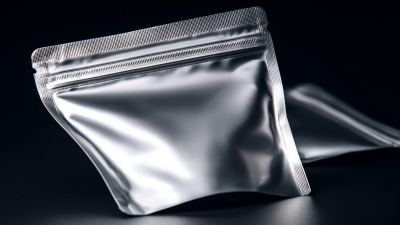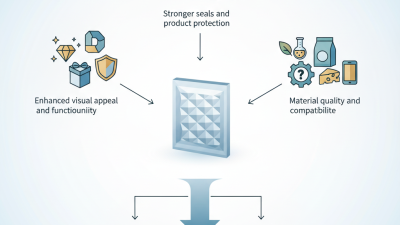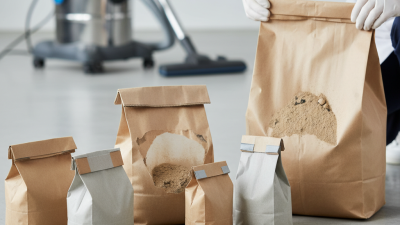
Choosing the right Embossing Vacuum Roll Bag starts with the product, not the price. Its textured channels help air move toward the vacuum sealer, while the film must withstand sealing, storage, and handling. A roll offers flexibility: cut a short piece for cheese or a longer one for bulkier portions. But texture, thickness, seal quality, and machine compatibility all matter.
Industry figures show why the choice deserves care. The Flexible Packaging Association’s 2024 State of the U.S. Flexible Packaging Industry report estimated U.S. sales at $42.9 billion in 2023. Grand View Research estimated the global vacuum packaging market at $29.6 billion in 2023, with further growth projected. These figures cover broad packaging categories, not embossed rolls alone. They signal a sizable market, but do not prove that every product performs equally. That distinction matters.
For a practical comparison, check the stated material and thickness, roll width, embossed pattern, and sealing requirements. Consider what you will store, how long it needs protection, and whether the roll fits your machine. Look for clear manufacturer specifications and food-contact information relevant to your intended use. Then test a small batch. Check the seal after cooling, and inspect for wrinkles or trapped air. Small details count. I would not choose by glossy claims alone; packaging performance can vary with the food, machine, and operator. There is no perfect roll for every kitchen. A careful match is the better starting point.
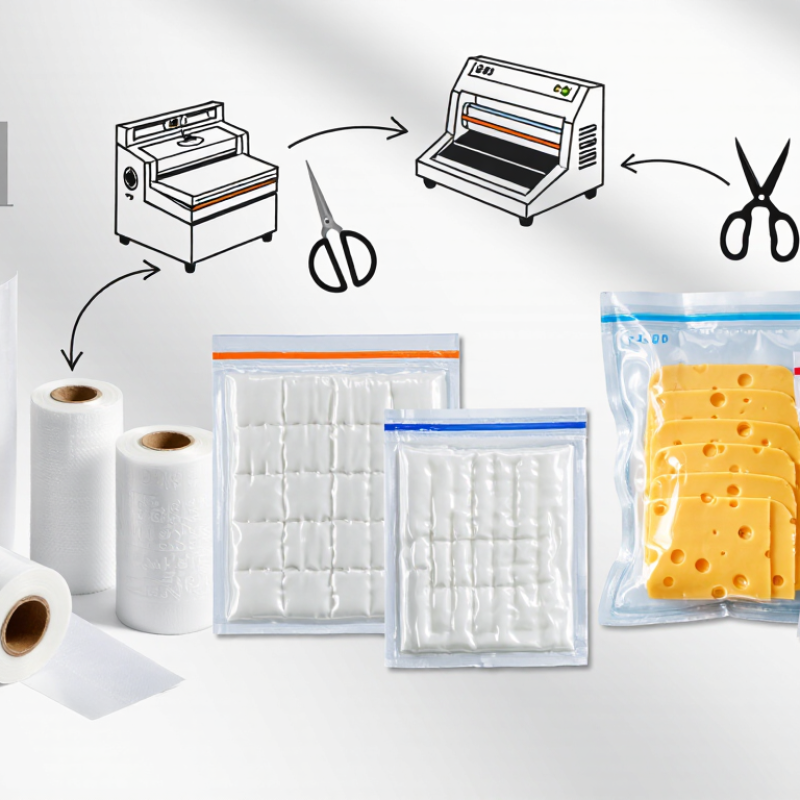
An embossed vacuum roll bag is a flexible, heat-sealable pouch sold as a continuous tube. One side has a raised pattern; the other is usually smoother. Cut the roll to fit the food, seal one end, then place it in a compatible external vacuum sealer. The patterned surface creates small channels between the bag and its contents. These paths help air move toward the machine’s suction opening instead of being trapped against a flat film.
That pattern matters.
Embossing is not decoration alone, but it does not make food last indefinitely. The channels support air removal; the sealed edge keeps the package closed. In practice, a wet cut of fish or a sharp bone can complicate sealing, so leave clear space near the open edge and keep the seal area dry. A bag may look tightly wrapped while still holding air in a fold. I have found that checking the finished seal by hand is worth the extra moment.
Tips: Check that the roll fits your sealer and is marked for food contact. Use short test seals when changing roll types. Leave room around uneven foods, and inspect the seam for gaps or wrinkles. If the texture looks shallow, performance may vary; appearance alone is not a reliable quality test.

Embossed vacuum rolls commonly combine polyamide (PA) for toughness with polyethylene (PE) for heat-sealing. PA helps resist punctures and slow oxygen transfer; PE forms the seal. For moist foods, oily marinades, or freezer storage, check the supplier’s barrier and temperature data. Do not assume every PA/PE film performs alike. Embossed channels help air escape, but a weak seal can still leak. Small detail, big consequence. The Flexible Packaging Association’s 2023 State of the U.S. Industry report valued U.S. flexible-packaging sales at $42.9 billion in 2022. That figure shows the category’s scale, not the performance of any particular roll.
As a practical starting point, 3-mil (about 76-micrometer) film suits many smooth portions, while 4-mil (about 102-micrometer) film offers more protection around hard edges or during freezer storage. These are guidelines, not universal specifications. Check that the roll fits your sealer. Test a moist item and one with sharp edges, then inspect the channels and seals after cooling. Excess thickness may slow sealing; thin film may puncture. I would not choose by thickness alone. Emboss depth and machine settings are easy to overlook. Ask for thickness tolerances and food-contact documentation, then test the exact roll on your equipment.
A roll only works well when its texture suits the sealer. Many external-suction machines need an embossed surface to draw air through the bag. Check the sealer manual for compatible bag types and maximum roll width. Chamber sealers may require smooth bags instead, so do not assume embossed rolls will work.
Check the width at the sealing bar, not just the machine’s outer casing. The roll should fit flat, with room for a clean seal on both sides of the food. Measure the item’s width and height, then allow extra material for sealing and handling. A roast with a bone needs more clearance than a flat stack of vegetables. Too little space makes loading awkward.
Confirm the roll’s core size and length if your sealer uses a holder or cutter. Some machines accept different roll lengths but have strict width limits. Cut a short test pouch and seal it empty. Look for a continuous seam with no wrinkles, gaps, or trapped food particles. Then test it with a dry item before packing anything valuable. This step takes a minute. It can prevent wasted bags, though a test seal does not guarantee every food will store equally well.
How to Choose the Best Embossing Vacuum Roll Bag
How to Compare Barrier Strength, Durability, and Food Safety
Compare barrier performance against the food you plan to store. Oxygen transmission matters for many fatty or aromatic foods, while moisture control matters for dry ingredients. Check the bag’s published specifications rather than relying on thickness alone. A thicker film is not automatically a better barrier. Small detail, big difference.
Embossed channels help air move toward the vacuum port on compatible external-seal machines. Look for even, clearly formed texture, then check that the roll seals cleanly without wrinkles. For durability, consider puncture resistance if you pack bones, shells, or firm frozen portions. Try a short sample run with your actual food; a neat countertop test may not reveal a weak seal after handling. I’d still inspect the first few bags.
Food safety deserves equal attention. Choose material intended for food contact, and review the supplier’s documentation for the foods, temperatures, and storage conditions you expect. Do not assume every vacuum bag is suitable for boiling, microwaving, or freezer use. Keep raw foods separate during packing, and follow safe chilling and storage practices; vacuum packaging does not make food shelf-stable. If product details are vague, pause and ask for clarification. That small delay is worthwhile.
| Comparison Dimension | What to Look For | Why It Matters | How to Compare Options | Practical Selection Tip |
|---|---|---|---|---|
| Barrier strength | Oxygen transmission rate (OTR) and water-vapor transmission rate (WVTR) for the complete bag film. | Lower transmission rates generally mean less oxygen and moisture pass through the film, which can help protect product quality during storage. | Compare published test results only when the test method, temperature, humidity, and units are stated. Results measured under different conditions may not be directly comparable. | Choose a barrier suited to the food, storage period, and storage conditions. Vacuum packaging does not replace refrigeration or safe food handling. |
| Film structure | A food-contact film structure commonly uses polyamide (PA) for strength and puncture resistance with polyethylene (PE) as the sealant layer. | Different layers perform different functions. The inner sealant layer must form a reliable seal, while the full structure contributes to barrier and mechanical performance. | Ask for the material specification and confirmation that the stated barrier and strength values apply to the finished film, not just one layer. | Confirm that the roll is designed for external-suction vacuum sealers; textured channels help air move toward the sealer during evacuation. |
| Film thickness | Thickness is often stated in mil or micrometers. For reference, 3 mil is about 76 micrometers and 4 mil is about 102 micrometers. | Thickness can affect puncture resistance and handling, but it does not by itself establish barrier performance or overall quality. | Compare measured thickness and tolerances, and review puncture or seal testing where available. Do not rely on thickness alone as a durability rating. | For foods with bones, sharp edges, or rough surfaces, consider a more puncture-resistant option and use suitable preparation or protective wrapping. |
| Embossing and air removal | Consistent channel pattern and texture on the side intended to face the machine’s suction path. | Embossing creates air pathways that help external-suction machines remove air from the package. | Check the roll’s machine compatibility and test whether the sealer evacuates air consistently without blocking the channels. | Follow the sealer manufacturer’s loading instructions; positioning and a clean, flat sealing area help produce a dependable seal. |
| Puncture and tear resistance | Supplier test data for puncture, tensile, or tear performance, plus consistent film quality across the roll. | Damage can compromise the package and allow air or liquid to enter or escape. | Compare results from the same test method. For practical checks, inspect sample bags after sealing and handling, while recognizing that informal checks are not standardized tests. | Allow extra margin for sharp, dense, or irregular products; a thicker film alone is not a guarantee against punctures. |
| Seal reliability | Compatibility with the sealer’s heat-sealing system and clear, complete seals without folds, gaps, or trapped food particles. | A weak or incomplete seal can cause vacuum loss even when the film has good barrier properties. | Test the roll using the intended sealer, settings, food type, and storage conditions. Follow the equipment instructions for seal time and temperature. | Leave a clean sealing area and check completed seals before storage. Re-seal or replace packages with visible defects. |
| Food-contact safety | Documentation showing compliance with applicable food-contact regulations for the intended market and use. | Suitability depends on the materials, food type, contact duration, and temperature—not simply on a general “food safe” statement. | Request a food-contact declaration and relevant migration or compliance documentation. Verify that it covers the actual intended conditions of use. | Do not assume every vacuum roll is suitable for boiling, microwave use, or sous-vide cooking. Use only when the supplier confirms the relevant temperature and time limits. |
| Storage and use conditions | Declared limits for freezer storage, refrigeration, heating, and any other intended application. | Cold, heat, and long storage periods can affect the package and its seal; a package’s suitability depends on its specified use. | Check the product specification for temperature limits and intended applications, and follow food-safety guidance for storage and cooking. | Keep perishable foods at safe temperatures. Vacuum packaging does not make food shelf-stable unless a validated process specifically establishes that. |
| Roll dimensions and consistency | Roll width, length, thickness uniformity, and compatibility with the sealer’s cutting and sealing area. | Correct dimensions reduce waste and help ensure the bag fits the product and machine. | Verify stated dimensions and inspect samples for wrinkles, channel interruptions, or uneven edges. | Choose a width that leaves enough material around the food for a clean seal, without stretching the bag tightly over the contents. |
Note: Performance varies by film construction, manufacturing, test conditions, sealing equipment, and intended use. Request current technical and food-contact documentation for the specific roll before purchase.
Choose a roll by matching its width to your sealer and your usual portions. Embossed channels help air move toward the machine’s suction area, but the bag must be compatible with your model. For small servings, a narrow roll can reduce offcuts. For a whole loaf or family-sized portions, a wider roll may save time. Check thickness and material details, too. A low price is less useful if seals fail or the film punctures against frozen edges.
Storage habits matter. The UNEP Food Waste Index Report 2024 estimates that 1.05 billion tonnes of food were wasted worldwide in 2022, across households, food service, and retail. Vacuum bags cannot prevent every cause of spoilage, but suitable portion sizes can help you store food more deliberately. Leave enough space above the food for a clean seal, and label each bag with its contents and date. Small detail. It helps later.
Tips: Compare cost per usable bag, not just roll price. Measure your freezer shelf and the items you actually store before buying a large roll. If you mostly seal moist foods, check your machine’s instructions and use its recommended sealing method. I still find it easy to overestimate how much roll I need; a smaller first purchase can be the wiser test.