How to Choose a Mesh Bag for Pool Vacuum?
A pool vacuum works only as well as its collection system. The Mesh Bag For Pool Vacuum catches leaves, insects, grit, and other debris before they return to the water. The right choice depends on your vacuum model, the debris you face, and how often you clean. A bag that looks suitable may still restrict water flow or slip from its attachment point. Small detail. Big difference.
Pool & Hot Tub Alliance (PHTA) industry statistics describe a U.S. residential pool base of roughly 10.7 million. That scale makes routine maintenance a practical concern for many pool owners. The CDC’s Model Aquatic Health Code also emphasizes effective circulation and filtration in aquatic facilities. These sources do not rank vacuum bags, but they underline why fit and flow deserve attention. A tightly woven mesh may catch finer particles, yet it can clog faster when leaves and seed pods are common. A more open weave may preserve flow, but let smaller debris pass through. There is no perfect bag for every pool.
This guide explains how to compare mesh size, capacity, seams, attachment style, and material durability. It also considers cleaning effort and compatibility, so you can avoid buying by appearance alone. Check your vacuum’s manual before ordering. A replacement bag should fit securely and allow steady suction under normal use. One caveat: manufacturers do not always publish comparable mesh ratings, so practical fit checks still matter.
Understand How a Pool Vacuum Mesh Bag Works
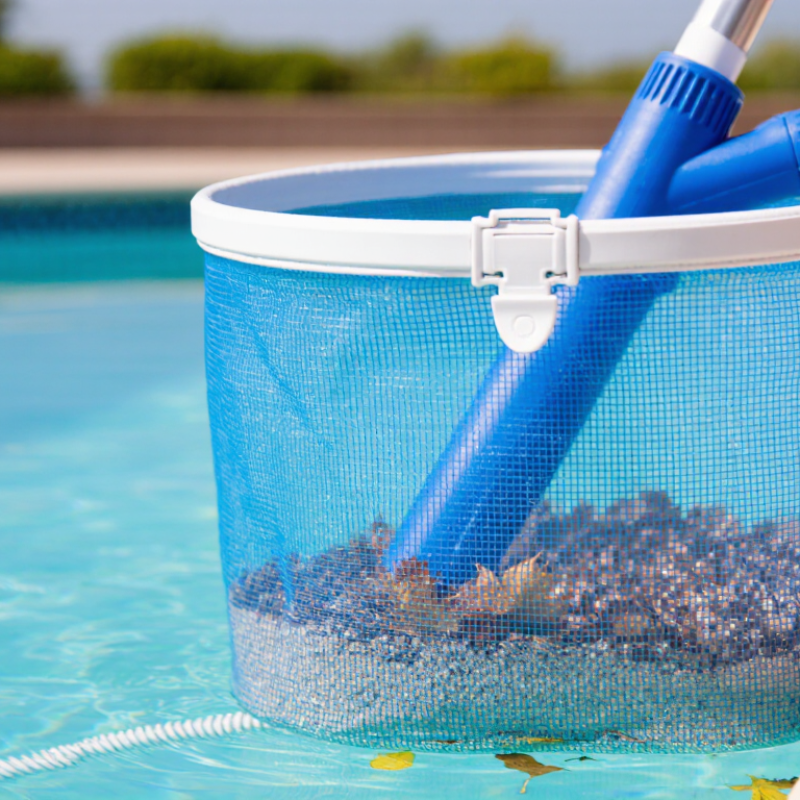
A pool-vacuum mesh bag catches solid debris as water passes through its fabric. Leaves, hair, and grit collect inside; water exits through the openings. The mesh does not trap every particle. Fine silt may pass through, depending on the weave and the cleaner’s design. That distinction matters. A bag is a debris collector, not a disinfectant or a substitute for the pool’s filter. CDC’s 2016 report on public aquatic-venue inspections found that about one in eight routine inspections resulted in immediate closure for serious violations. The finding concerns pool safety, not vacuum bags, but it underlines why mechanical cleaning cannot replace proper water treatment.
When choosing a bag, check that its attachment fits the cleaner and that the mesh suits the debris you usually see. A coarser weave may keep larger leaves while allowing better flow; finer mesh can catch smaller material but may clog sooner. Watch the water return and suction during use. If flow weakens, the bag may be full or clogged. Rinse it after each session, especially when fine dust settles in the seams. Small holes can be easy to miss. Inspect them against daylight. A bag that looks clean may still leak debris, and mesh alone is not enough.
How to Choose a Mesh Bag for Pool Vacuum? - Understand How a Pool Vacuum Mesh Bag Works
| Selection Factor |
How the Mesh Bag Works |
What to Choose |
| Debris size |
Water passes through the openings while debris larger than those openings is retained. |
Use a more open mesh for leaves and larger debris. Choose finer mesh when you need to catch smaller particles, and check the vacuum’s guidance for suitable mesh sizes. |
| Water flow |
Finer mesh can trap smaller particles, but it can also restrict water flow more quickly as debris collects. |
For heavy debris or longer cleaning sessions, prioritize adequate flow and inspect the bag often. Avoid using a mesh finer than the vacuum is designed to handle. |
| Debris type |
Mesh weave and bag construction affect how well the bag holds different debris during vacuuming. |
For leaves, twigs, and larger litter, choose a durable bag with a more open weave. For fine silt or small particles, use a compatible fine-filter bag if the vacuum supports one. |
| Bag capacity |
The bag stores collected debris; a full bag can reduce cleaning efficiency and may place extra strain on the vacuum. |
Choose a capacity that fits the vacuum and the amount of debris you typically collect. Empty the bag before it becomes overfilled. |
| Fit and attachment |
The bag must connect securely to the vacuum outlet or collection area to keep debris from escaping. |
Confirm the bag’s dimensions, attachment style, and model compatibility before buying. A poor fit can cause leaks or prevent proper operation. |
| Closure and emptying |
A closure helps keep collected debris inside the bag during removal and emptying. |
Look for a closure that stays secure while vacuuming and opens easily for cleaning, such as a suitable zipper, clip, or drawstring design. |
| Material and seams |
The fabric and stitching hold debris under repeated water flow and handling. |
Choose water-resistant, purpose-made mesh with reinforced seams. Check for fraying, holes, or damaged stitching and replace a bag that can no longer retain debris. |
| Cleaning and reuse |
Rinsing clears trapped material from the mesh and helps restore water flow. |
After use, remove debris and rinse the bag with clean water. Let it dry as recommended by its maker, and follow the vacuum’s care instructions. |
Practical tip: Mesh opening, capacity, and attachment details vary by vacuum model. Check the equipment instructions and bag specifications before selecting a replacement.
Check Vacuum Compatibility and Bag Attachment
A mesh bag should match the vacuum’s connection, water flow, and debris load—not just its shape. Check whether the opening uses a clip, zipper, drawstring, or rigid collar, then compare its dimensions with the vacuum’s inlet and collection chamber. A loose collar can let leaves bypass the bag; an overly tight fit may distort the opening. Also check the vacuum’s rated flow in gallons per minute. A dense mesh can restrict suction, especially when it fills with fine silt.
NSF/ANSI 50-2023 is a recognized performance standard for pool and spa equipment, including circulation components. It is not a universal fit guide for replacement bags, so ask for the bag’s measured mesh opening and flow-test details. These figures matter: two bags that look alike may capture different debris or affect suction differently. I would not choose by color or fabric feel alone; that shortcut is easy to regret after a cloudy cleaning cycle.
Tips: Before buying, measure the attachment point and note the vacuum model’s flow rating. Check the bag with a handful of damp leaves, then inspect the seal for gaps. Rinse it after use. Fine debris can clog mesh faster than expected.
Choose Mesh Size for the Debris You Need to Collect
A mesh bag should match the smallest debris you expect to vacuum, not just the largest leaves you can see. Check the opening size in microns or millimeters; “mesh count” alone can be misleading because it does not always describe the actual aperture. The USGS Wentworth scale classifies sand as roughly 0.0625 to 2 millimeters across. That range is wide. Fine sand can slip through a bag designed for leaves, while a very tight weave may clog quickly with larger debris.
For leaves, seed pods, and coarse grit, a more open mesh usually keeps water flowing and makes the bag easier to rinse. For fine silt or dust, choose a tighter weave and test it on a small area first. Watch the return flow: if suction drops, the mesh may be too fine or already loaded. Pool water conditions vary, so one size may not suit every cleanup. I have found that “finer is better” is an easy assumption, but it can mean more stopping and cleaning. The USGS grain-size classification offers a useful reference for sediment, not a complete guide to pool debris. Check the bag’s stated opening size and observe what escapes during a short test.
Compare Bag Materials, Capacity, and Durability
When choosing a mesh bag for a pool vacuum, compare the material, opening size, and stitching—not just the price. Nylon and polyester mesh are common choices because they are lightweight and dry quickly. Finer mesh can catch small leaves and grit, but it may clog sooner and reduce water flow. Check that the bag fits your vacuum model and that its closure seals securely. A loose seam can let debris escape. Small details matter.
Tips: Match capacity to the debris you usually collect. A larger bag means fewer stops, but an overfilled bag can strain seams and make emptying awkward. Rinse it after use, then let it dry fully. Check the care instructions before using cleaners.
Look for reinforced seams and sturdy attachment points, especially if your pool collects twigs or heavy, wet leaves. Sunlight, pool chemicals, and repeated washing can wear mesh over time, so durability depends on care as well as fabric. There is no perfect mesh. A very fine bag may trap more debris but need more frequent cleaning; a coarse one may keep water moving but let small particles through. Inspect the stitching and closure regularly, and replace the bag if you spot tears.
How to Choose a Mesh Bag for a Pool Vacuum
Compare common mesh materials for durability and resistance to outdoor pool conditions.
How to read this: Ratings are qualitative comparisons of typical material properties, not standardized test results. Actual performance depends on fabric construction, mesh opening, coatings, and care.
Capacity: Bag volume is determined mainly by its dimensions, not the fiber. Check the stated capacity and opening size: choose a larger bag if your pool collects lots of leaves, and a finer mesh if you need to capture smaller debris. Finer mesh may fill faster and restrict water flow.