10 Best Cloth Compression Bags for Travel and Storage
Packing cubes can keep a suitcase tidy, but bulky sweaters and spare bedding still take up precious room. A Cloth Compression Bag can reduce the space soft items occupy by pressing out trapped air or using a roll-and-seal closure. The result is practical, not magical: bags vary in capacity, fabric strength, and how well their closures hold. A packed bag should still fit comfortably in your luggage.
The environmental context matters, too. The U.S. Environmental Protection Agency reported that Americans generated 17 million tons of textiles in 2018, while 2.5 million tons were recycled (Advancing Sustainable Materials Management: 2018 Fact Sheet). That report does not measure compression bags or prove they reduce waste. It does, however, underline why durable, reusable storage deserves attention. Professional organizer Marie Kondo writes, “The act of folding is far more than making clothes compact for storage” (The Life-Changing Magic of Tidying Up). Her point is useful here: careful packing starts with handling clothes well, not simply squeezing them smaller.
This guide compares ten options for travel and home storage, focusing on usable capacity, closure design, fabric feel, and ease of packing. Look for clear dimensions, reinforced seams, and instructions that match the bag’s compression method. Small details count. A zipper that catches can spoil a rushed morning. And marketing claims are not the same as independent test results; some listings provide little evidence about long-term durability. These picks are intended to help you compare, not promise a perfect fit for every suitcase or closet.
What Cloth Compression Bags Are and How They Save Space
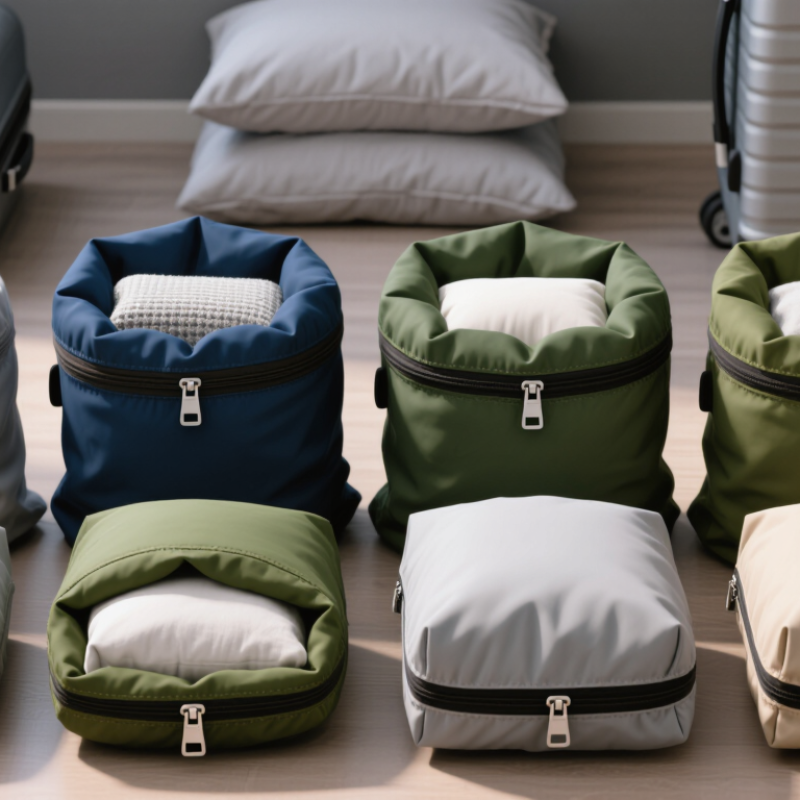
Cloth compression bags are soft, reusable containers made to reduce the space clothing takes up. Many use a second zipper or adjustable straps to press folded items closer together. Some designs also include a valve for removing air, so check how each bag works before packing. The fabric keeps clothes contained, while the closure does the compressing. They can be useful for sweaters, spare bedding, or a puffy jacket. They do not make heavy items lighter. That distinction matters.
Compression can also wrinkle delicate fabrics, and a tightly packed bag may be awkward to fit into a suitcase. A small drawback is that fabric bags can absorb odors if stored damp. Let items dry fully before packing, and avoid forcing the zipper when the bag is overfilled. A little room makes handling easier.
Tips: Fold clothes into flat layers and place heavier pieces near the bottom. Compress gradually, checking that seams and zippers are not under strain. Leave a little space for easy unpacking. For longer storage, keep the bag somewhere dry and inspect it now and then. Not every fabric item needs compression; sometimes a simple fold works better.
How to Choose a Bag for Travel or Home Storage
When choosing a cloth compression bag for travel,
match its shape to your luggage. A narrow bag fits beside shoes, while a flat one can sit over folded shirts. Check the packed dimensions, not just the bag’s empty size. Sizing charts can be imperfect, so compare them with your suitcase or carry-on measurements.
Look at how the bag compresses. Straps are simple and let you adjust pressure by hand; zipper systems may save space quickly but can strain if overfilled. Feel the fabric and inspect the seams, especially around handles and closure points. Small details matter. A clear panel or label also makes it easier to find a sweater without unpacking everything. Leave room for the fabric to close without forcing it.
For home storage, prioritize capacity, sturdy stitching, and a shape that stacks neatly on a shelf.
Cloth can help keep garments together, but it is not a moisture-proof barrier. Store clean, fully dry items, and avoid placing the bag in a damp basement or directly on a floor. Breathable fabric may suit seasonal clothing, though it offers less protection from dust than a sealed container. There is no perfect option: a travel-friendly bag may be too small for bulky bedding, and a large storage bag can be awkward to carry.
Ten Cloth Compression Bags Compared by Size and Features
Ten Cloth Compression Bags Compared by Size and Features
A useful comparison of ten cloth compression bags starts with measurements, not “small” or “large” labels. Record each bag’s length, width, and packed thickness, since size names vary between sellers. Compare capacity using the same items: for example, two sweaters, four shirts, or a folded duvet. Then check zipper quality, compression method, fabric weight, handles, and whether contents remain visible.
UN Tourism reported 1.4 billion international tourist arrivals in 2024, about 99% of 2019 levels. That signals strong travel demand, not proof that any bag performs well.
For travel, slim bags suit shirts and trousers; medium sizes handle sweaters or children’s clothing; large bags fit jackets and bedding. Roll-and-clip designs are simple, while zipper-compression styles can reduce bulk more evenly. Look for reinforced seams and smooth zipper tracks, especially when bags will be opened often.
Cloth can breathe, but it is not automatically waterproof or airtight. Compression may also crease delicate garments. A comparison should note those trade-offs rather than rank bags by size alone.
Tips: Pack identical clothing in each candidate bag, then measure its packed thickness. Leave a little space around the zipper. Overfilling strains seams, and the stated capacity can be optimistic.
Care, Storage, and Common Limitations of Cloth Compression Bags
Cloth compression bags work best when you pack flexible items, such as T-shirts, sleepwear, and soft scarves. Fold garments flat, then press air out gradually while closing the bag or tightening its straps. Avoid forcing the closure over a bulging load; seams and zippers can strain, and uneven pressure may leave a hard lump. They are not magic. Unlike airtight vacuum bags, most cloth versions reduce bulk without fully blocking air or moisture.
After a trip, empty the bag and check its care label. Spot-clean small marks with mild soap and a damp cloth, then let the bag dry completely before storing it. Trapped moisture can cause musty odors, especially if the bag sits in a closed suitcase. For a washable bag, use a gentle cycle only when the label allows it. Air-drying is usually kinder to its seams and fabric.
Store the bag loosely folded in a cool, dry cupboard, away from damp floors and direct sunlight. Keep delicate knits and padded coats compressed only during travel; long, tight storage can flatten loft or leave stubborn creases. A little wrinkling may still happen. I would not rely on cloth bags to protect clothes from spills, pests, or humidity. They save space, but they offer limited protection, and that trade-off is easy to overlook.