How to Choose Slider Zipper Bags for Bulk Buying in 2026
Bulk buying Slider Zipper Bag products in 2026 is not simply a matter of finding the lowest price per unit. The right choice depends on bag dimensions, film thickness, zipper performance, carton quantities, and how the bags will be filled and stored. Small differences matter. A zipper that catches during packing can slow a production line, while oversized cartons can raise warehouse and freight costs.
Grand View Research’s Flexible Packaging Market report estimated the global market at USD 261.8 billion in 2023 and projected a 4.8% compound annual growth rate from 2024 to 2030. This offers useful context for purchasing trends, but it is a broad-market estimate—not a forecast for slider zipper bags alone. Treating it as bag-specific evidence would be a mistake.
For a reliable 2026 buying decision, compare like with like: request samples, confirm usable dimensions and material specifications, and test the zipper with the actual product and filling process. Ask suppliers to state minimum order quantities, lead times, carton counts, and quality-control procedures in writing. If the bags will contact food, verify applicable documentation for the intended market and use. A polished sample is not enough. Bulk orders can expose weaknesses that a small test misses, and even a careful checklist cannot predict every handling issue. Review the evidence, then leave room to reassess.
Define Bag Dimensions, Fill Weight, and Case Quantity Before Pricing
How to Choose Slider Zipper Bags for Bulk Buying in 2026
Define Bag Dimensions, Fill Weight, and Case Quantity Before Pricing
Before requesting quotes, measure the product at its widest point and specify the usable interior dimensions. A bag that fits an item flat may fail when filled. For powders or granules, test the actual fill weight; volume alone does not predict how a slider bag handles. Record the filled bag’s height, width, and thickness. Then check whether the slider closes without straining or trapping product in the track. Small details matter.
Case quantity changes the real unit price. Compare the total bag count, bags per case, and any minimum order quantity, not just the quoted case cost. The Flexible Packaging Association’s 2023 State of the U.S. Flexible Packaging Industry Report estimated U.S. industry sales at $42.9 billion for 2022. That figure signals a substantial packaging sector, but it does not tell you which bag specification suits your product. Test a sample first. I’ve seen a seemingly cheaper case create awkward storage and inconsistent filling. Not ideal.
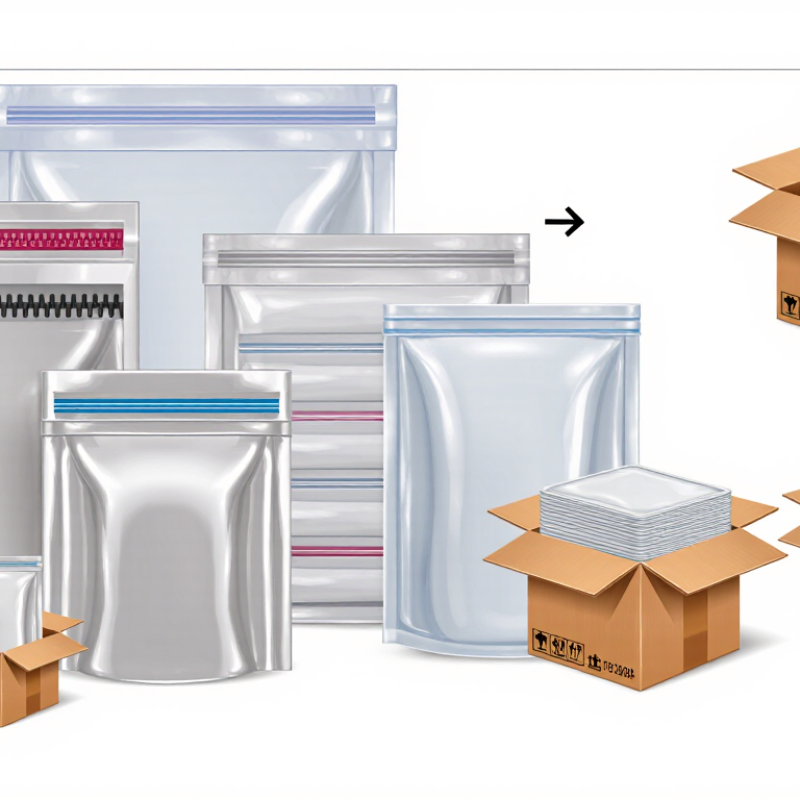
For a useful comparison, send suppliers one specification sheet: interior dimensions, target fill weight, closure style, material needs, and annual case estimate. State whether dimensions are internal or external; suppliers may interpret them differently. Ask for the case’s gross weight and outside dimensions, too, especially if pallets or shelf space are tight. Keep a small tolerance allowance. Real products are rarely perfectly uniform.
Compare Film Gauge: 1 mil = 25.4 μm; Check ASTM D882 Tensile Strength
How to Choose Slider Zipper Bags for Bulk Buying in 2026
When comparing slider zipper bags, start with film gauge, but do not treat thickness as a complete measure of quality. One mil equals 25.4 μm, so a 2-mil film measures about 50.8 μm. Check whether the supplier states the gauge for one wall or both walls; unclear listings can make comparisons unreliable. A thicker film may feel sturdier, yet resin type, bag construction, and manufacturing quality also affect performance.
Ask for tensile strength data tested under ASTM D882, a standard method for evaluating tensile properties of thin plastic sheeting. Compare results only when specimen preparation, film direction, conditioning, and test speed are similar. Higher tensile strength can indicate better resistance to pulling, but it does not prove the slider or zipper seal will hold. Request separate closure or leak-test information if those features matter for your use. Small detail, big difference.
Tips: Request a specification sheet and samples from the same production type you plan to buy. Measure thickness with suitable equipment, then test filled bags with realistic contents. A sharp corner can expose weaknesses that a smooth test strip misses. I would not choose by gauge alone; it is tempting, but incomplete.
How to Choose Slider Zipper Bags for Bulk Buying in 2026
Compare nominal film gauge in micrometers, then review supplier tensile-strength data tested using ASTM D882.
How to read this chart: 1 mil equals 25.4 μm, so the bars show the thickness equivalents for 1–4 mil film. These are unit conversions, not measurements of specific bags. Film thickness alone does not establish strength; when comparing bulk options, request ASTM D882 tensile results and check that test conditions and specimen direction are comparable.
Verify Food-Contact Compliance Against FDA 21 CFR 177.1520
When buying slider zipper bags in bulk, check the food-contact materials—not just the bag’s appearance. FDA 21 CFR 177.1520 covers certain olefin polymers, including polyethylene and polypropylene, under specified conditions. It does not automatically certify every bag or zipper assembly. Details matter.
Ask the supplier for an item-specific compliance statement identifying the resin and applicable section of the regulation. Confirm that the documented conditions match your use, including food type, temperature, and contact duration. If the bag includes colored film, printing, or a zipper profile made from another material, ask how those components are assessed. The slider may sit outside the food-contact area, but verify its position and construction rather than assuming.
Request supporting test data or technical documentation, plus lot identification for the shipment. A sample can help you inspect seal strength and zipper movement, but handling tests do not establish regulatory compliance. Paperwork can look tidy. It may still leave gaps. Compare the documents with the exact product specification and intended use before placing a large order. If a supplier’s statement is broad or unclear, ask for clarification in writing; “food grade” alone is not enough to verify compliance with 21 CFR 177.1520.
Assess Impact and Package Integrity with ASTM D1709 and D3078
How to Choose Slider Zipper Bags for Bulk Buying in 2026
Assess Impact and Package Integrity with ASTM D1709 and D3078
When comparing slider zipper bags, ask suppliers for test data, not just thickness claims. ASTM D1709 measures plastic film’s resistance to impact from a falling dart under specified conditions. It can help compare films that may face drops, rough handling, or heavy contents. Results depend on test method, specimen, and conditions, so compare like with like. A higher result does not guarantee a bag will survive every shipping situation.
Tips: Request representative samples from the production run. Close the slider, fill each bag with a consistent load, and check the zipper track and side seals. For added evidence, ASTM D3078 evaluates leaks in flexible packaging using bubble emission under vacuum. Ask how the test was conducted and whether the complete bag, including its closure, was tested.
Use both standards as part of a purchasing decision, not as a pass-or-fail promise of real-world performance. D1709 focuses on film impact; D3078 can reveal certain leaks, but it does not identify every possible failure. Compare results alongside practical checks, such as repeated opening, stacking, and handling filled bags.
One detail is easy to overlook: slider movement may feel smooth on an empty sample but stiff when the bag is packed. That can happen. Review several samples before placing a bulk order.
Compare Cost per Bag, Units per Case, and Freight per 1,000 Bags
For 2026 bulk orders, compare the delivered cost of usable bags, not just the quoted case price. Divide the invoice price by the accepted bag count to find cost per bag. Calculate freight per 1,000 bags as freight charge ÷ shipped bag count × 1,000. For example, 2,000 bags priced at $46 cost 2.3 cents each before freight. A $120 freight charge adds $60 per 1,000 bags. Check case quantities and pallet dimensions too; a low unit price may require more storage or complicate handling.
The U.S. EPA’s 2018 Advancing Sustainable Materials Management report estimates that containers and packaging made up 82.2 million tons, or 28.1%, of U.S. municipal solid waste. This broad figure is not specific to slider bags, but it makes bag weight and damaged stock worth tracking. Ask suppliers to quote the same specifications, case count, carton dimensions, freight terms, and defect allowance. Then verify it. Test sample bags with your actual contents and packing routine; a spreadsheet cannot show whether sliders snag during a busy shift.
How to Choose Slider Zipper Bags for Bulk Buying in 2026 — Compare Cost per Bag, Units per Case, and Freight per 1,000 Bags
Planning note: Figures are illustrative 2026 U.S.-dollar budget estimates, not supplier quotes. Landed cost per 1,000 bags is calculated from the estimated case price and case freight, scaled to 1,000 bags; it excludes taxes, duties, special printing, and handling fees. Actual pricing and freight vary by order volume, destination, bag specifications, and shipping method. Confirm case count, usable dimensions, and film thickness with the supplier before ordering.